Drainage Excavation & Underground Repair Vancouver
When underground drainage is collapsed, broken, separated or physically damaged, cleaning alone cannot repair the problem. The damaged section may need to be located, excavated and repaired or replaced.
Vancouver Underground Drainage Experts provides drainage excavation and underground repair throughout Greater Vancouver for perimeter drains, drain tile, weeping tile and other exterior drainage systems.
Whenever possible, we identify where the problem is located before excavation so we can determine whether a localized dig and repair is appropriate or a larger section of drainage needs to be exposed.
Trusted by Businesses & Property Managers
We've worked with businesses, property managers, strata, contractors and organizations throughout Greater Vancouver.














When Is Drainage Excavation Necessary?
Not every drainage problem requires excavation. Mud, sediment and some root obstructions may be addressed without digging when the drainage itself remains structurally serviceable.
Excavation becomes more relevant when there is physical damage underground that needs to be exposed before it can be repaired.
Collapsed or Crushed Drainage
A section of pipe that has physically collapsed cannot be restored simply by cleaning it. The damaged area may need to be excavated and replaced.
Broken or Cracked Pipe
Physical breaks can interfere with drainage and allow surrounding soil or roots to enter the system.
Separated Connections
Pipe sections and connections can shift or separate underground. Excavation allows the connection to be exposed and repaired.
Localized Drain Tile Failure
When the problem is limited to one area, it may be possible to excavate and repair that section without replacing the entire system.
Failed Underground Connections
Connections between drainage lines, downspouts, sumps or other components may need to be exposed when they have broken or disconnected.
Widespread Deterioration
When damage extends through multiple sections, a larger excavation may be required to access and replace the affected drainage.
We Don't Want to Excavate More Than Necessary
The first step is understanding what is happening underground and where the problem is located.
When the drainage is accessible, a drain camera inspection can help identify conditions such as collapsed pipe, separated sections, root intrusion, sediment buildup and other visible problems inside the drainage.
What we find helps determine the appropriate next step.

What We Repair With Excavation
Once the damaged area has been identified, excavation provides access to the underground drainage so the failed component can be repaired correctly.
Broken Pipe Replacement
Expose the damaged section, remove the failed pipe and install replacement drainage.
Drain Tile Repairs
Repair localized cracked, crushed, separated or otherwise damaged sections of perimeter drainage.
Disconnected Drainage
Expose separated connections and reconnect the drainage where appropriate.
Drainage Access Points
Create access points where appropriate for older drainage systems with limited inspection or maintenance access.
Failed Connections
Expose and repair damaged connections between underground drainage components.
Drainage Re-Routing
Redirect drainage routes or connections when the existing configuration is contributing to the problem.
How Drainage Excavation & Repair Is Done
Every drainage excavation is different, but most projects follow a similar process.
Investigate the Drainage Problem
We start by reviewing the symptoms and existing drainage. When appropriate, a camera inspection can provide additional information.
Locate the Area to Be Excavated
The goal is to determine where access is required before unnecessary digging begins.
Excavate to the Drainage
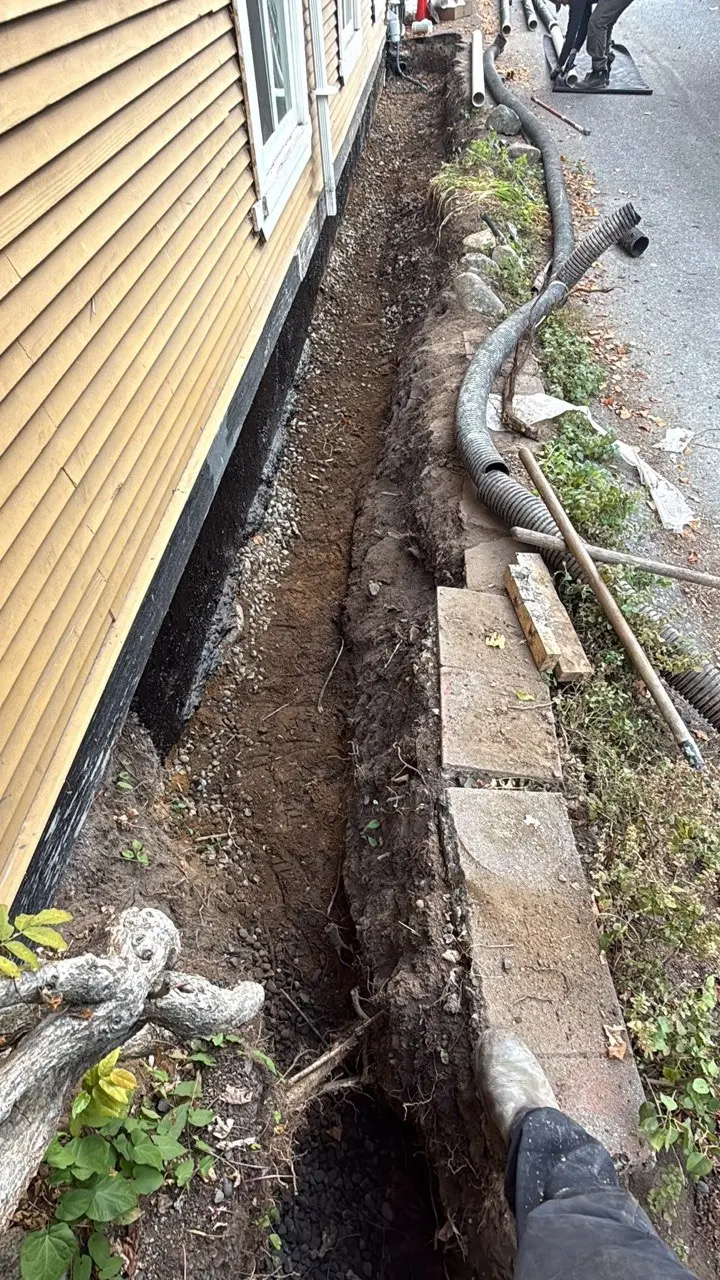
Soil, landscaping or other surface materials are carefully removed as required to expose the underground drainage.
Inspect the Exposed System
Once uncovered, the actual condition of the pipe, connections and surrounding area can be assessed directly.
Repair or Replace the Damaged Section
Broken pipe, failed connections or damaged drainage can then be repaired or replaced based on what is found.
Test the Drainage
The repaired drainage is checked before the excavation is closed.
Backfill the Excavation
The excavated area is backfilled after the underground work is completed.
Localized Dig-Ups & Larger Drainage Excavations
Drainage excavation does not automatically mean digging around an entire property. The amount of excavation depends on the location and extent of the problem.
Localized Drainage Excavation
When the problem is limited to one area, excavation may be limited to the section required to expose the damaged drainage.
Increases
Repair
Excavation
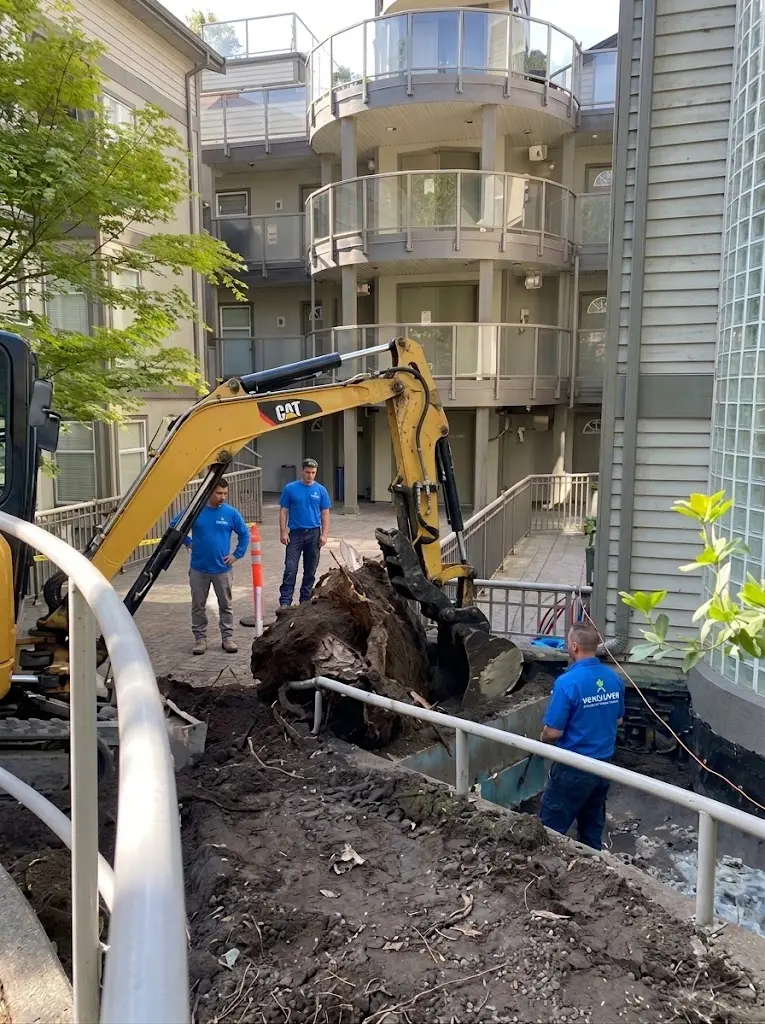
Larger Drainage Excavation
More extensive excavation may be necessary when multiple sections have failed, substantial drainage needs replacement or a larger underground drainage project is being completed.
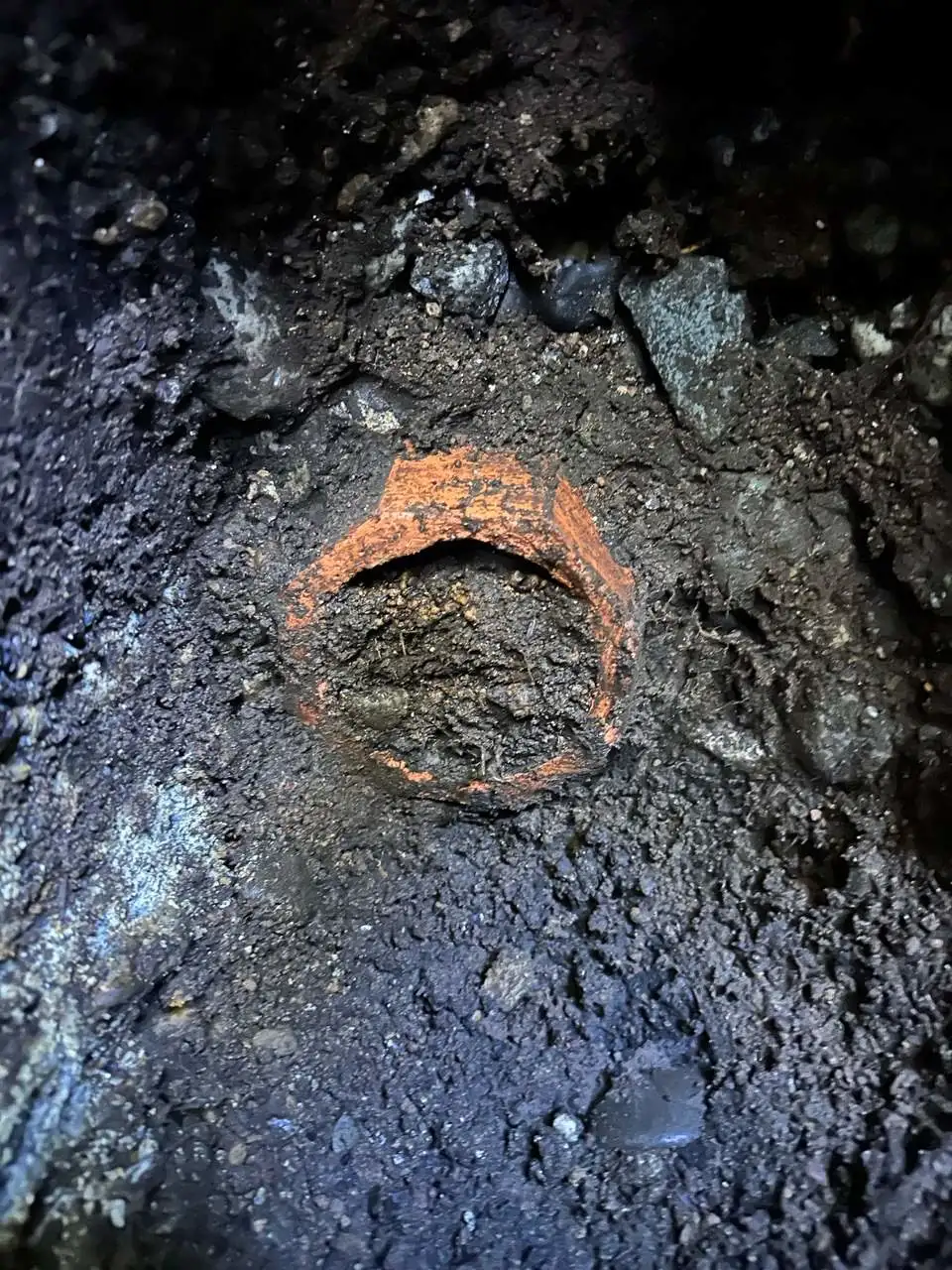
Excavating & Repairing Older Clay Drain Tile
Many older Greater Vancouver properties have sectional clay drain tile around the foundation. Unlike longer runs of modern drainage pipe, older clay systems contain numerous individual sections and joints.
Over time, sections can shift, separate or become damaged. When a problem is isolated to a particular area, excavation may allow us to expose the affected drainage and determine whether a localized repair is practical.
Shifted Joint
Individual clay sections can move out of alignment as the ground changes over time.
Broken Section
Clay can crack, break or deteriorate after years underground.
Localized Damage
A single failed area may sometimes be excavated and repaired without replacing the entire system.
Underground Drainage We Excavate & Repair
Our excavation work can provide access to a range of exterior underground drainage systems.
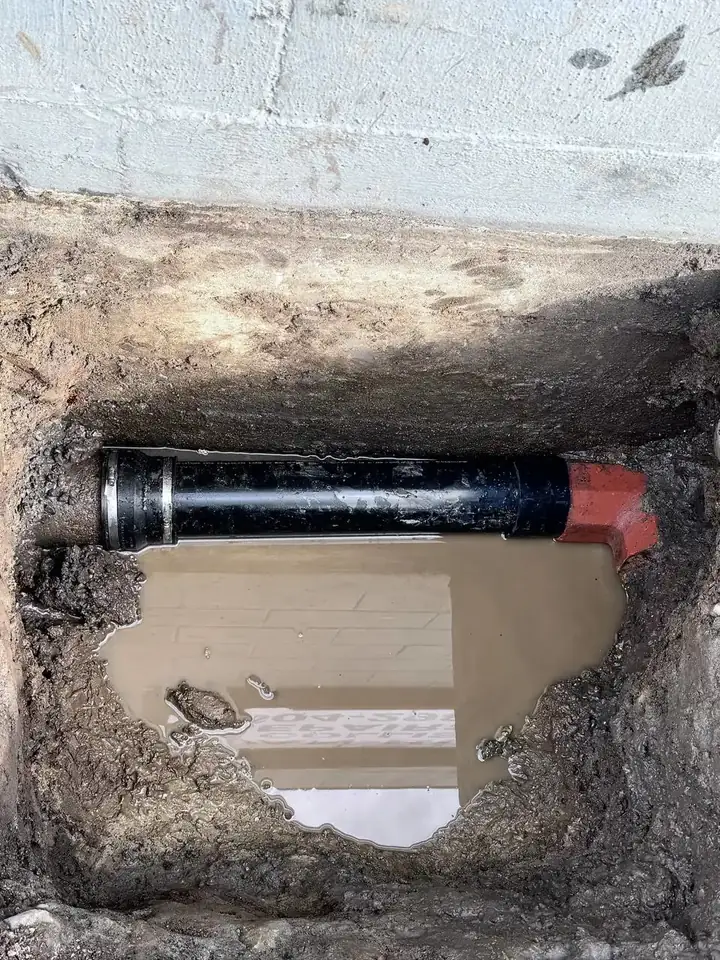
Perimeter Drains
Drainage installed around a building foundation to collect and move groundwater away.
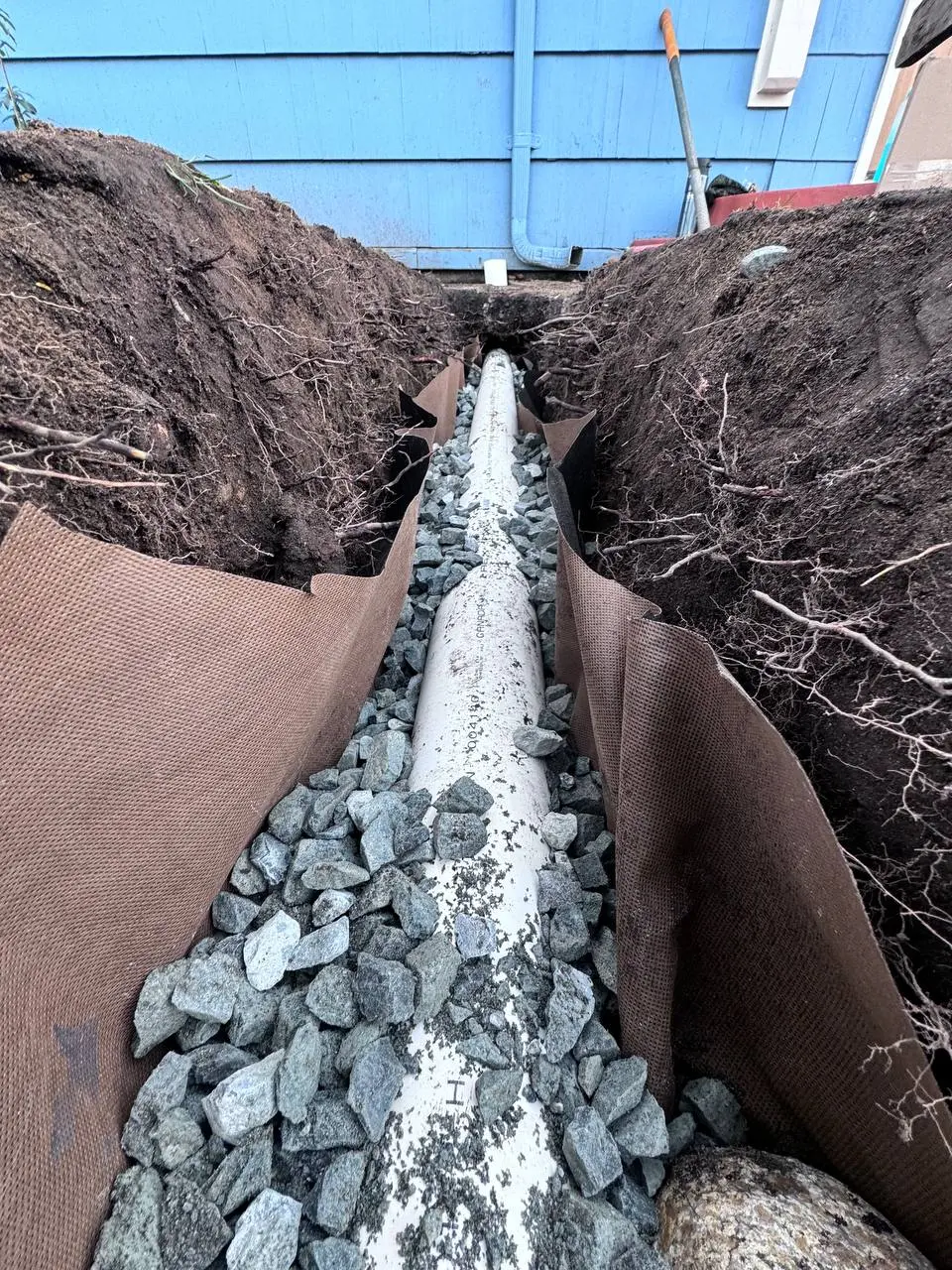
Drain Tile
Underground foundation drainage that may require excavation when sections become physically damaged.
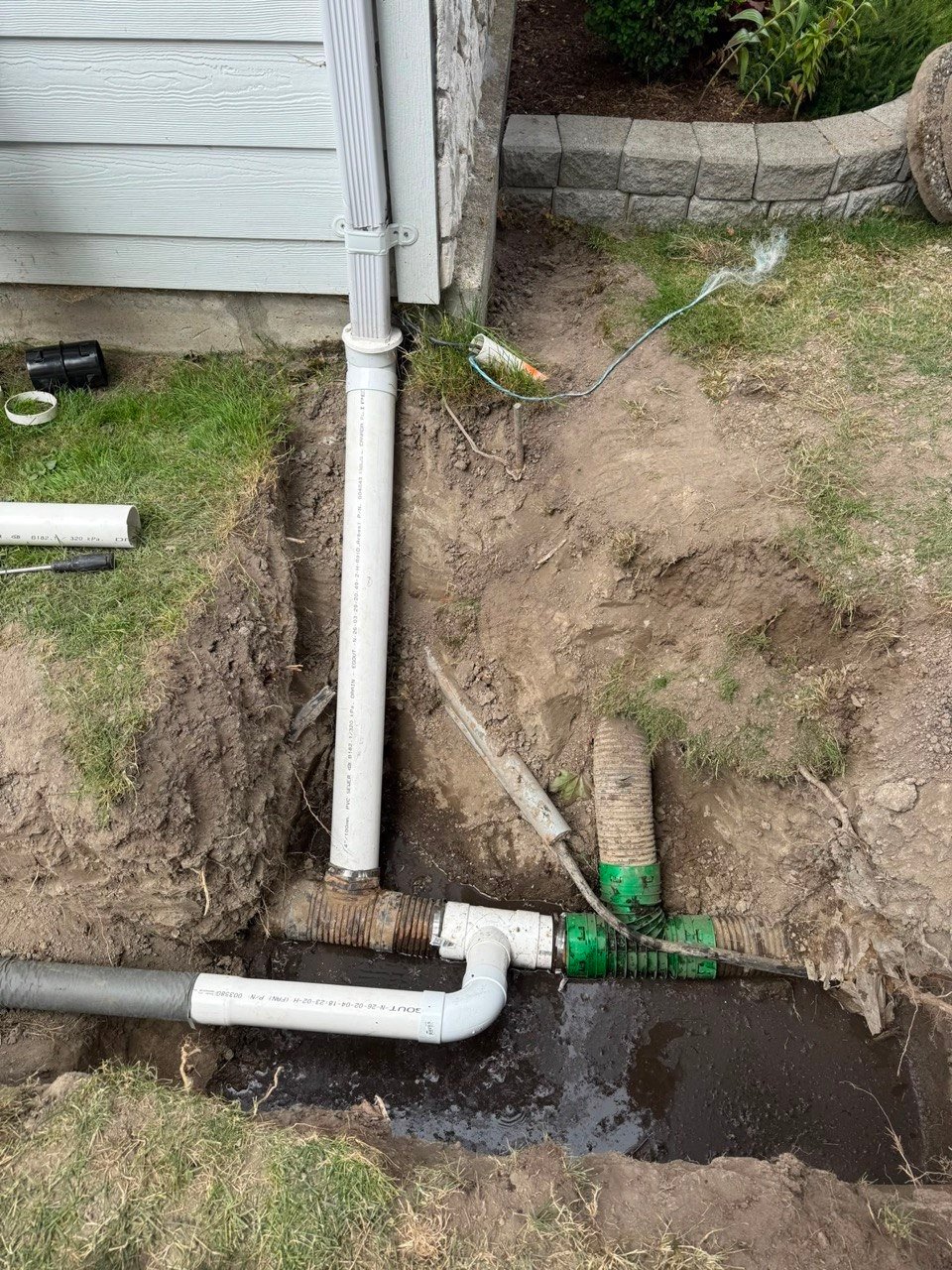
Weeping Tile
Foundation drainage that can include older clay systems as well as newer drainage materials.

Big O Drainage
Flexible drainage pipe used in various underground drainage applications.
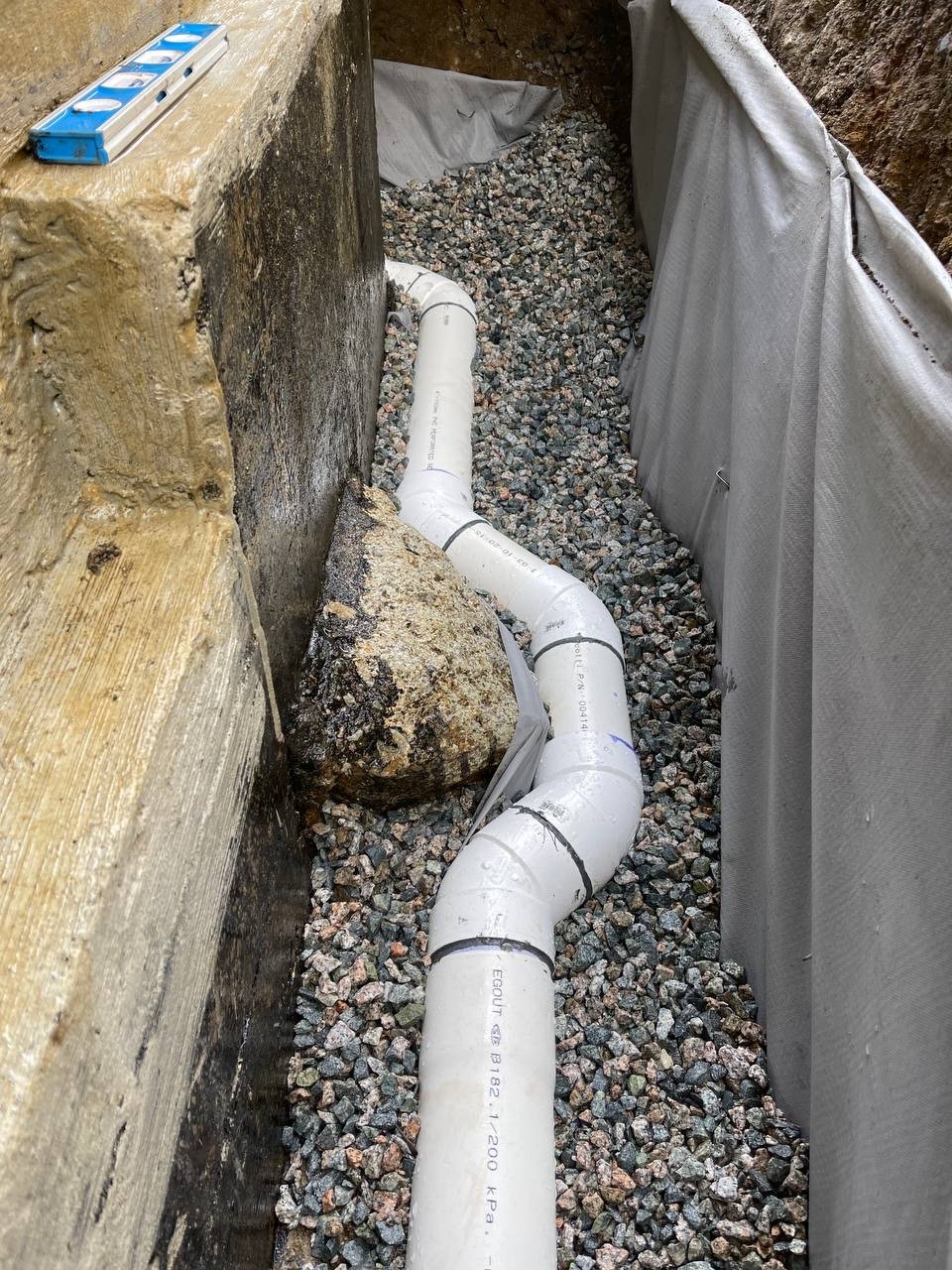
PVC Drainage
Rigid drainage lines and connections that may require localized excavation when damaged or disconnected.
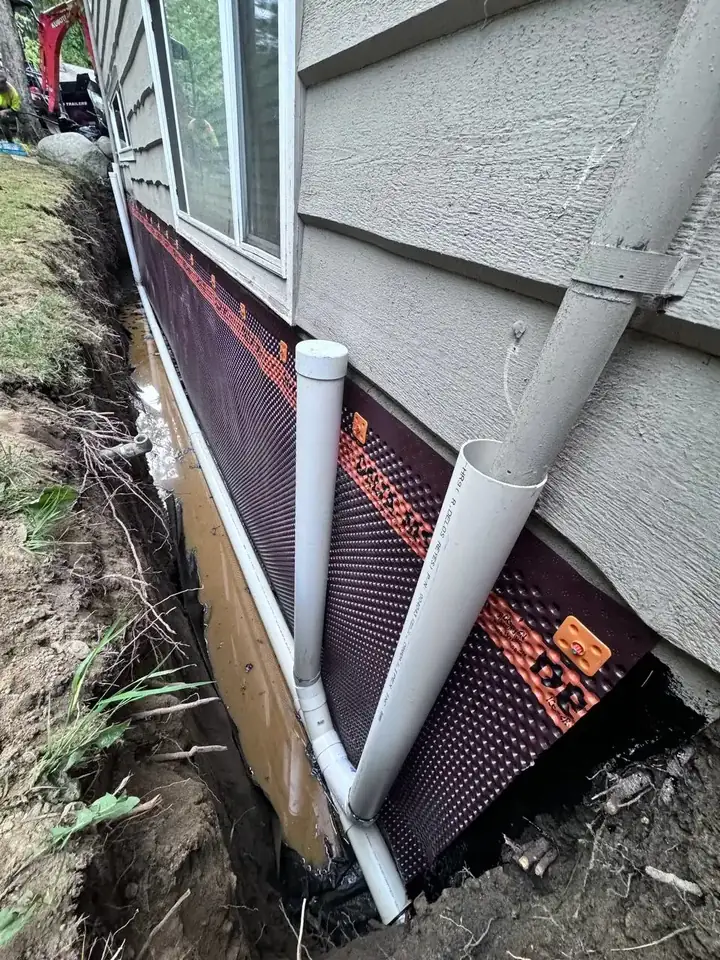
French Drains
Underground drainage systems designed to collect water from wet areas and redirect it.
Does Your Drainage Need Cleaning, Repair or Excavation?
A drainage problem does not automatically mean excavation is required.
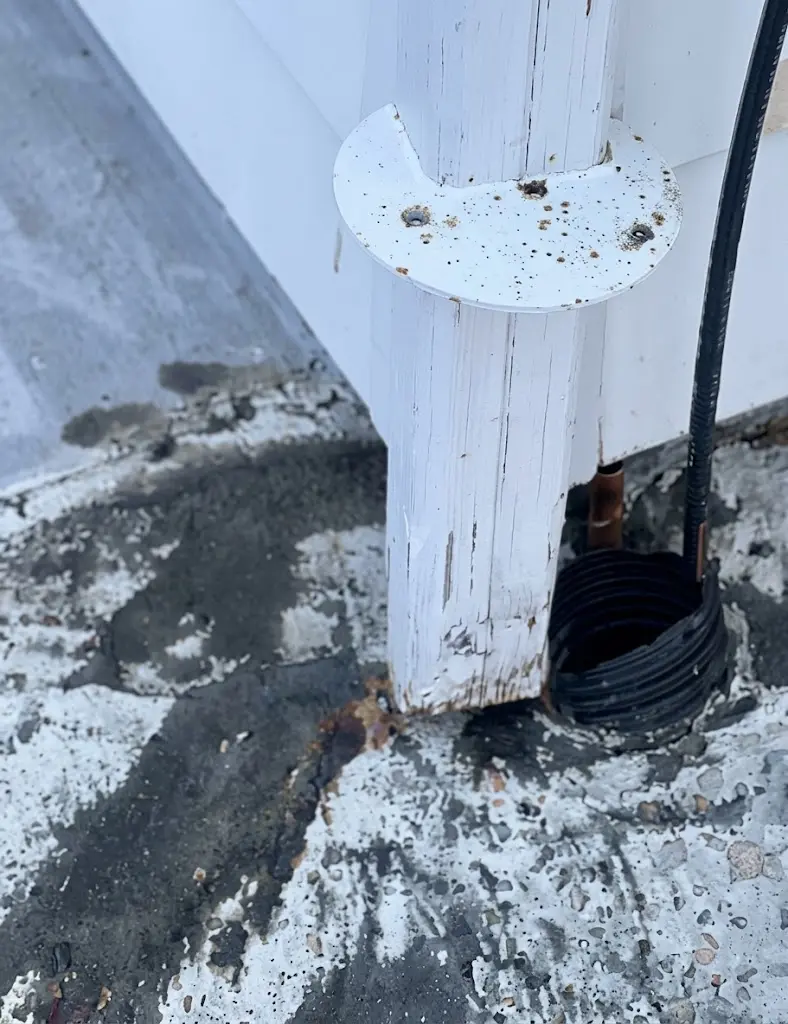
Drain Tile Cleaning
If the pipe remains structurally serviceable but is restricted by mud, sediment or removable buildup, cleaning may be the appropriate first step.
Learn AboutDrain Tile Cleaning →
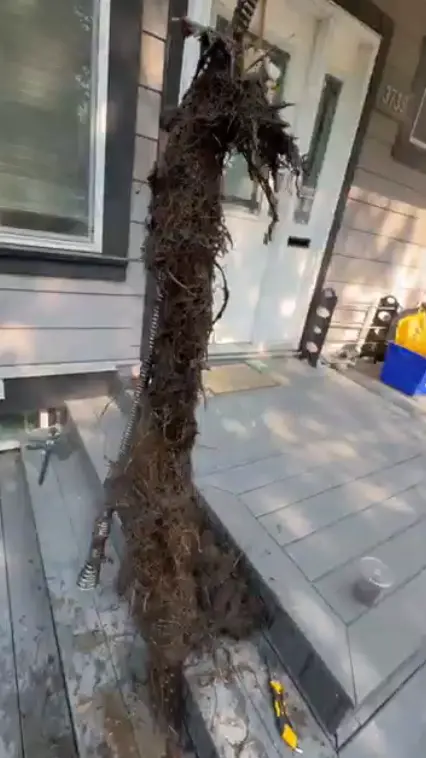
Drain Root Removal
If tree roots are restricting accessible drainage, mechanical root removal may be possible without excavating the entire system.
Learn AboutDrain Root Removal →
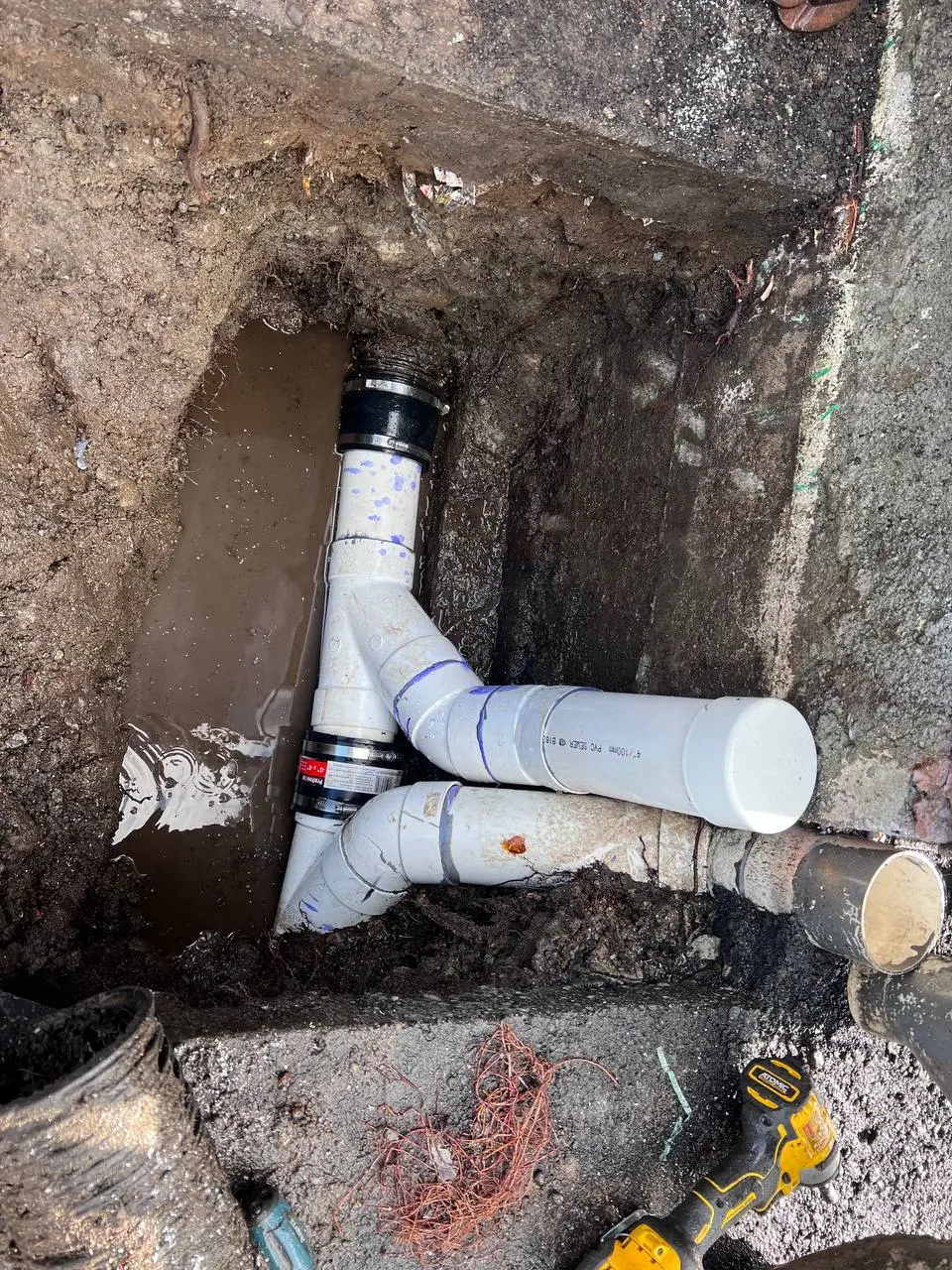
Drain Tile Repair
When physical damage is limited to a particular area, localized repair may be possible instead of replacing the entire drainage system.
Learn AboutDrain Tile Repair →
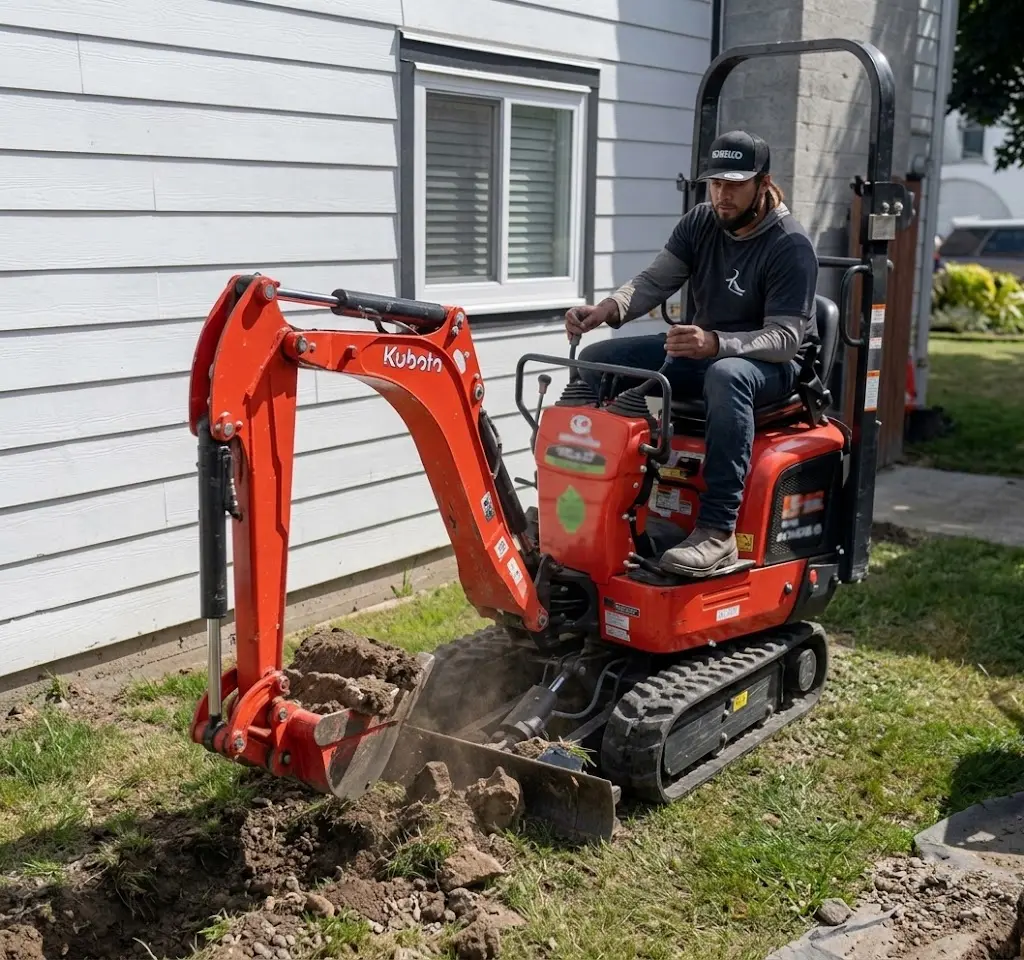
Drainage Excavation
When damaged underground drainage must be physically exposed before it can be repaired, excavation provides access to the affected section.
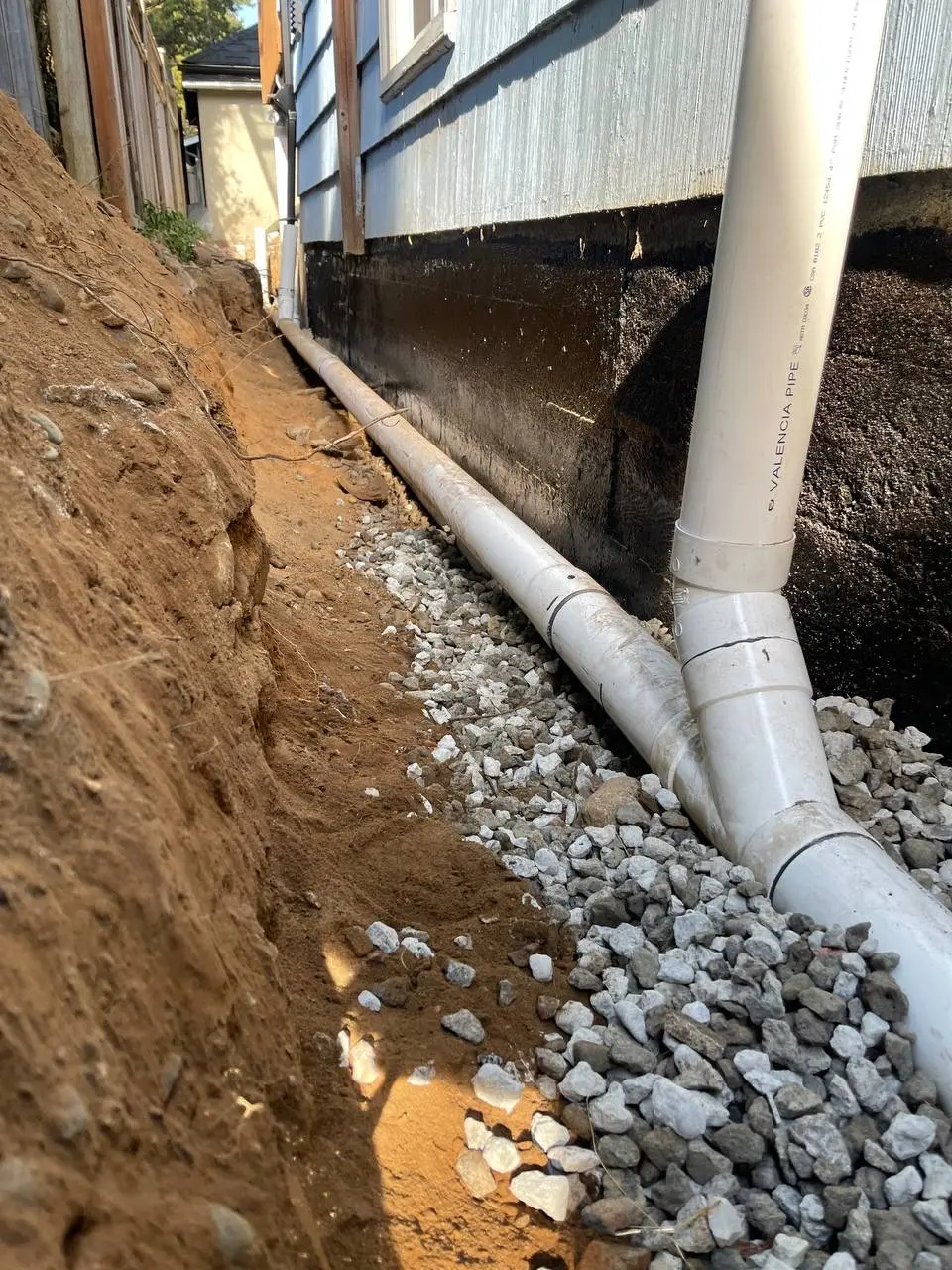
Drain Tile Replacement
When failures extend through substantial portions of the system, replacement may be more practical than repeatedly excavating individual sections.
Learn About Drain TileInstallation & Replacement →
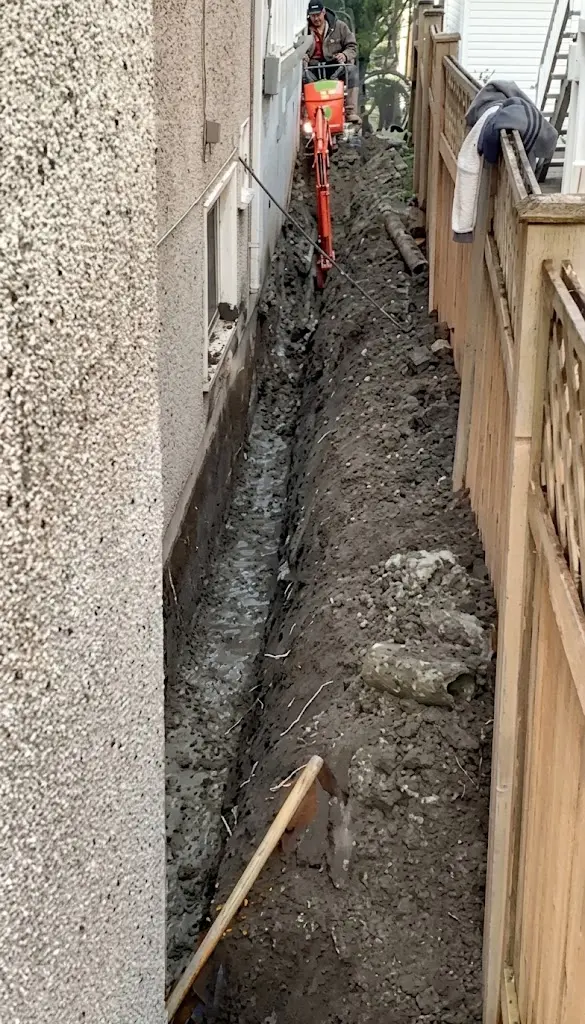
Every Drainage Excavation Is Different
The amount of work required to reach underground drainage depends on the property and the location of the damaged pipe.
Depth of the Drainage
Deeper drainage requires more excavation to safely reach the affected section.
Equipment Access
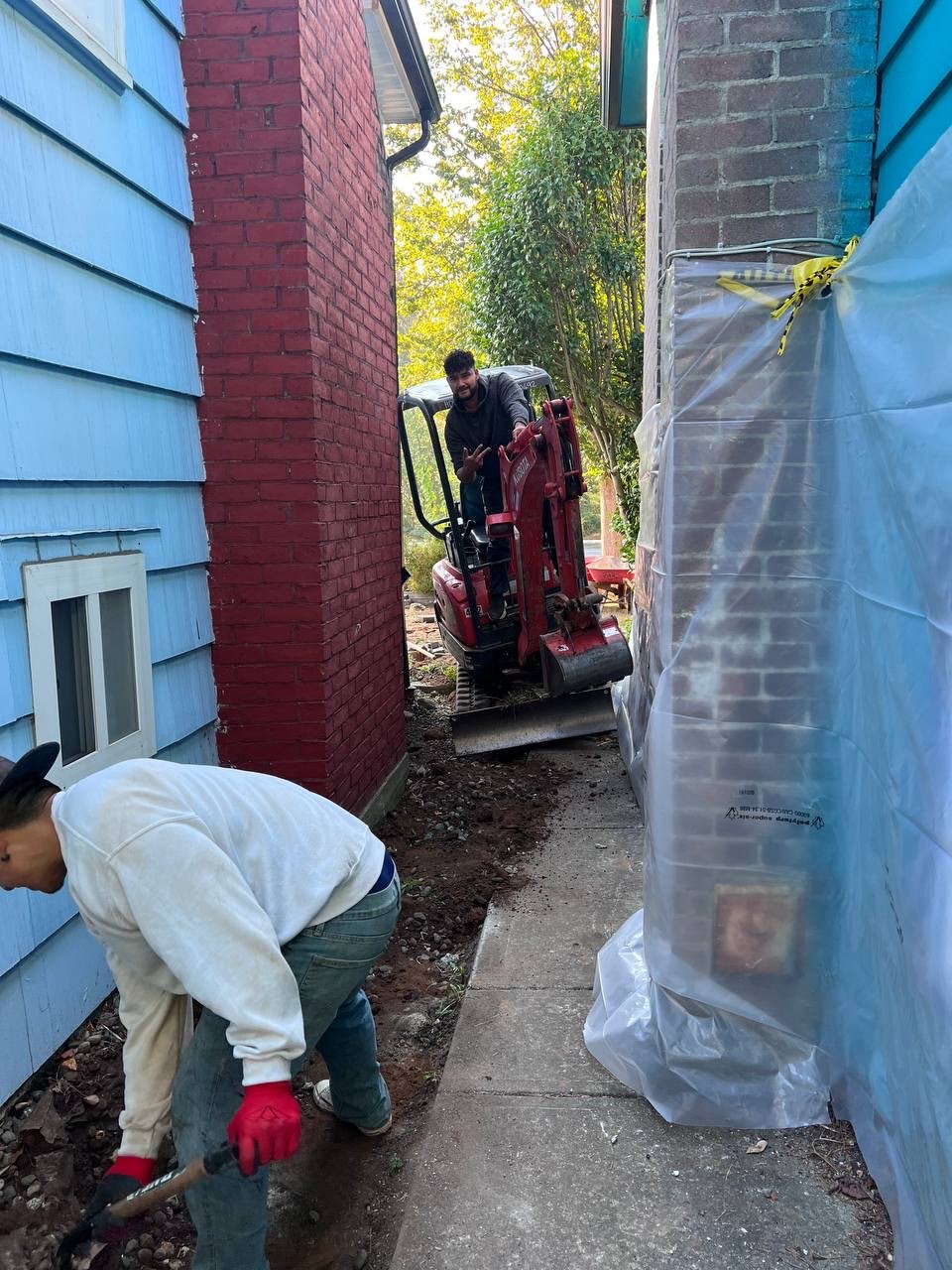
Open areas may allow machinery to assist with excavation, while narrow side yards and restricted spaces may require a different approach.
Concrete & Hard Surfaces
Sidewalks, patios, driveways or other surfaces above the drainage can affect how the system is accessed.
Landscaping
Gardens, retaining features and other landscaping may need to be considered when planning the excavation.
Location of the Damage
A single accessible damaged section is very different from a problem extending along a large portion of the foundation.
Existing Underground Services
The location of other underground infrastructure needs to be considered when planning excavation.
Drainage Excavation for Homes, Strata & Commercial Properties
We provide underground drainage excavation and repair for properties throughout Greater Vancouver.
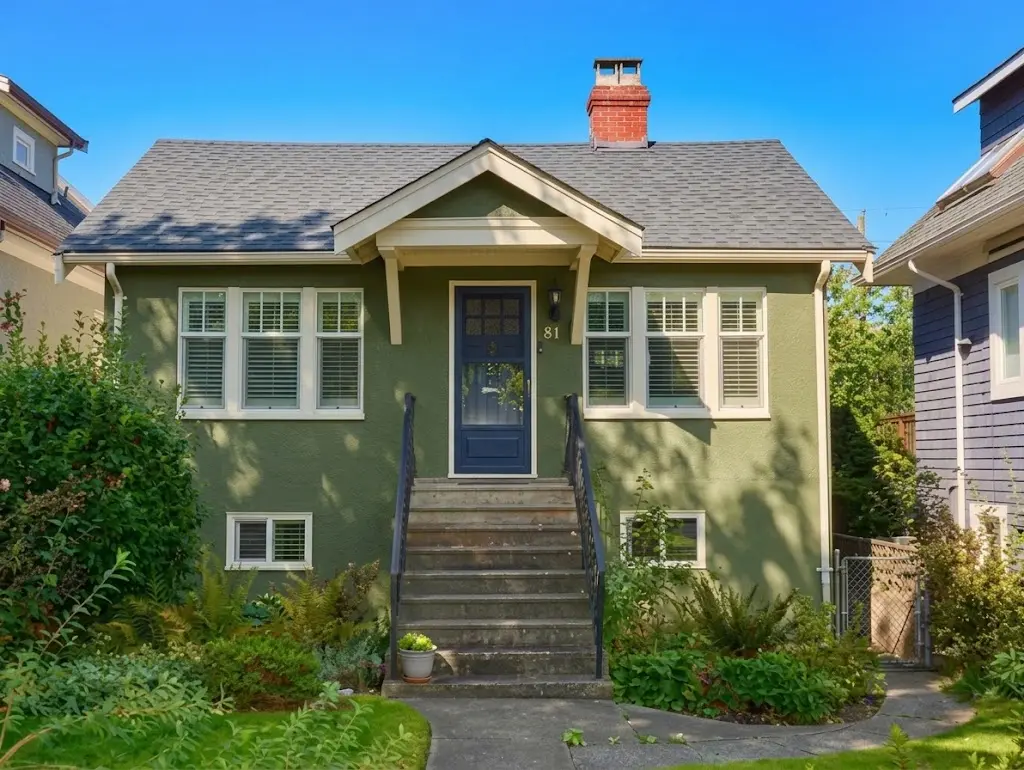
Residential
Drainage Excavation
Localized and larger excavation for damaged underground drainage around houses and residential properties.
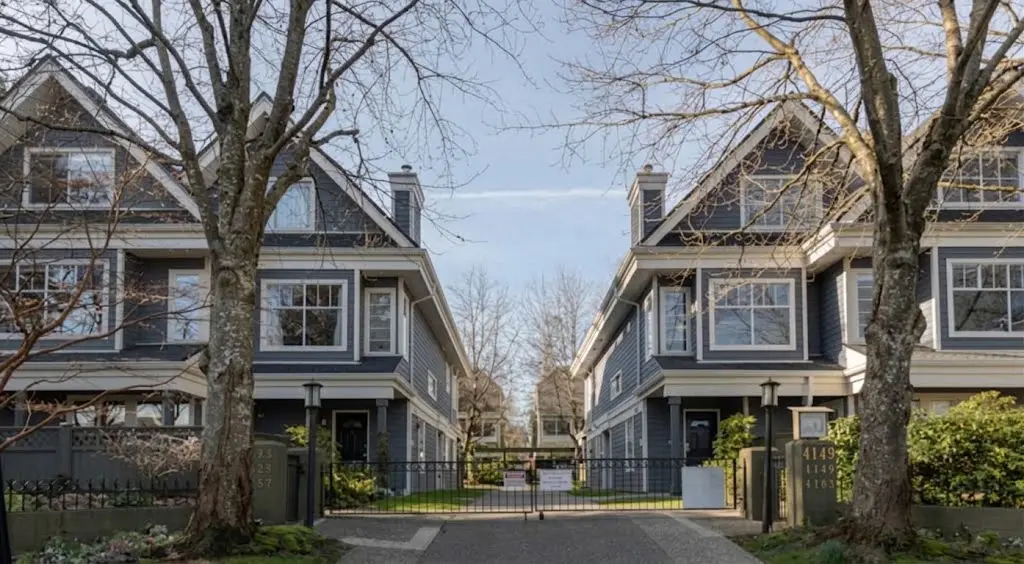
Strata
Drainage Excavation
Drainage investigation, excavation and repair around multi-unit buildings and common property.
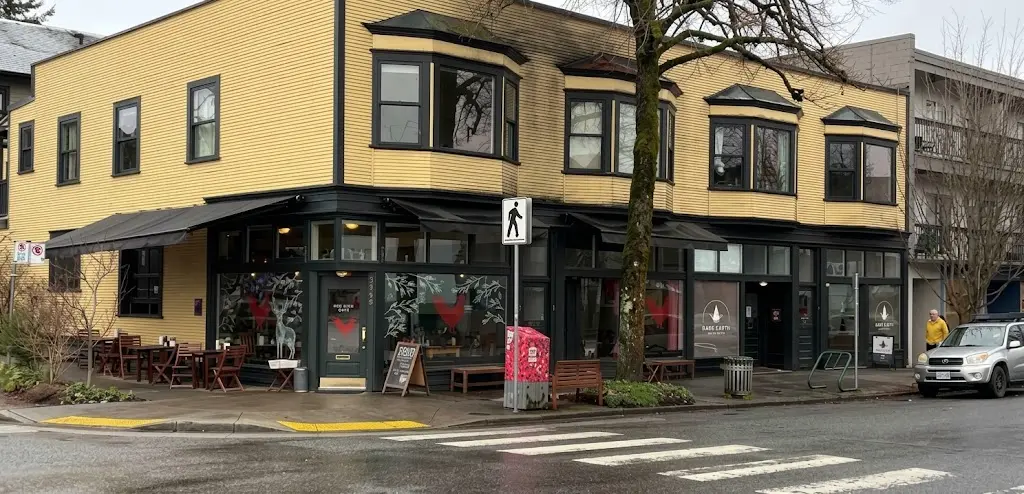
Commercial
Drainage Excavation
Underground drainage excavation and repair for commercial properties where damaged drainage needs to be exposed and accessed.

Ricardo Quintana — 20+ Years Experience
Ricardo has more than 20 years of experience working on larger drainage, excavation and landscaping projects throughout Greater Vancouver.
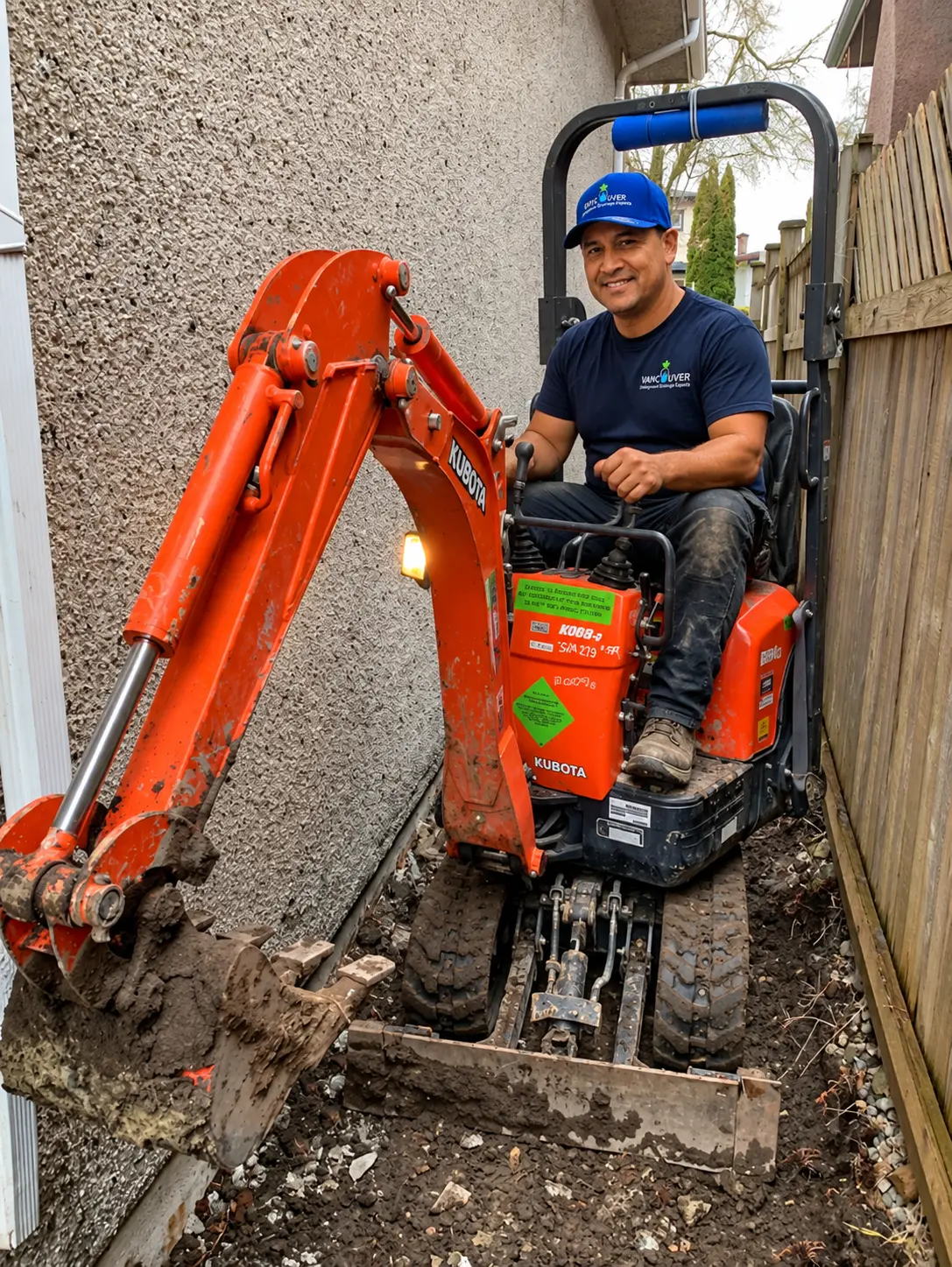
For projects requiring more substantial excavation, he works with a crew of experienced team members and the equipment needed to handle larger drainage scopes. Every project is assessed based on the site conditions, access, excavation requirements and the underground drainage work involved.
Crew
Projects
Equipment
Greater Vancouver
Underground Drainage Experience Matters
Excavation is only part of an underground drainage repair. The important part is understanding why you are digging and what needs to be repaired once the drainage is exposed.
Underground Drainage Focus
Perimeter drains · Drain tile · Weeping tile · French drains · Underground drainage connections
Diagnose Before Digging When Possible
We want to understand the location and nature of the drainage problem before recommending excavation.
Localized Repair When Appropriate
If the damage is confined to one section, we can assess whether repairing that area is practical rather than automatically recommending full replacement.
Experience With Older Drainage
We work with older clay drain tile as well as modern underground drainage systems.
Larger Excavation Capability
Ricardo and the crew can handle larger excavation and drainage projects when the scope requires it.
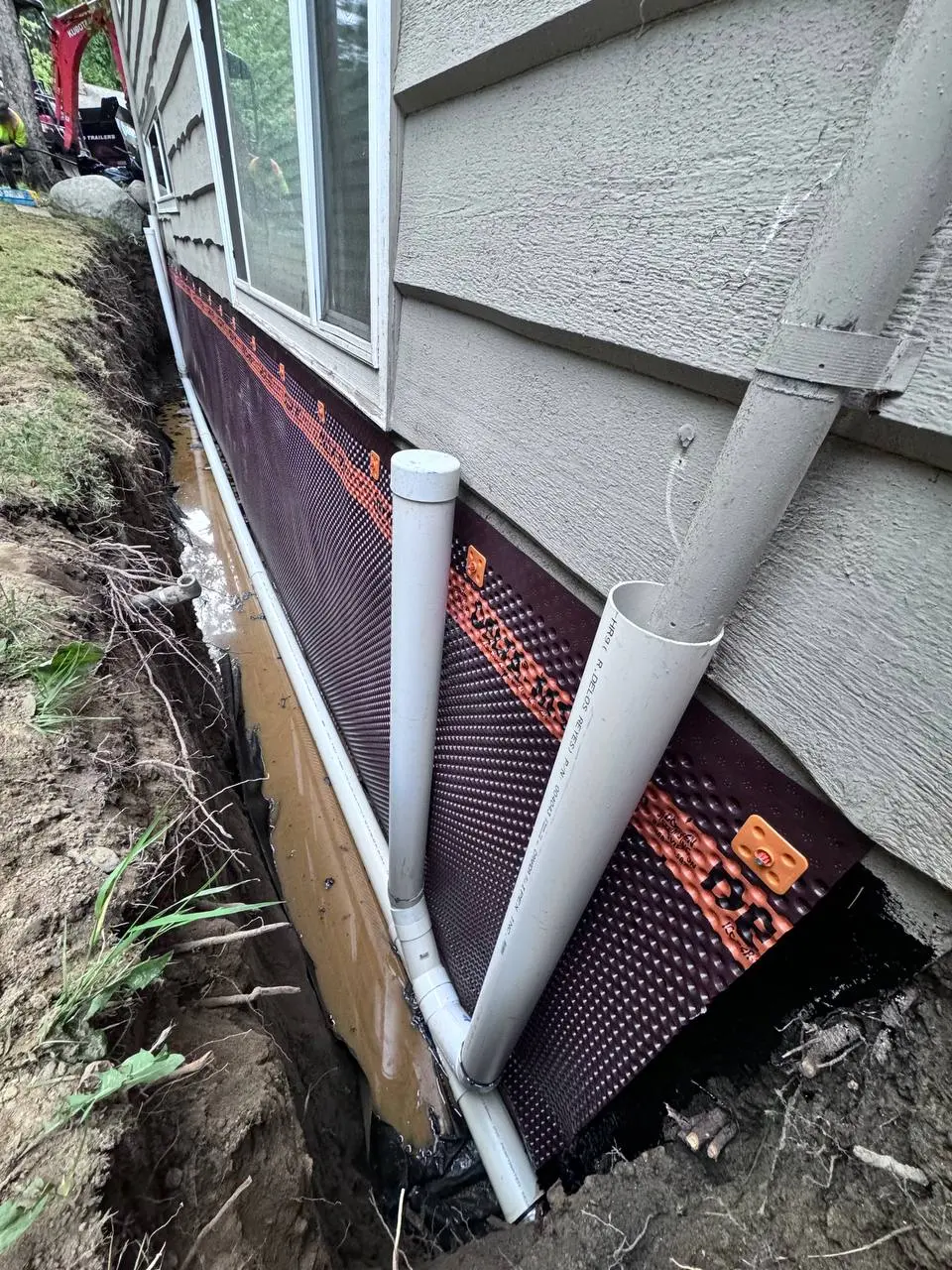

Drainage Excavation Throughout Greater Vancouver
We provide drainage excavation and underground repair for residential, strata and commercial properties throughout Greater Vancouver.
What Our Customers Say
Read real Google reviews from customers who have worked with Vancouver Underground Drainage Experts for drainage, foundation and waterproofing projects.
“excellent service to fix my sinkhole”
Kwok highlighted the team's clear explanation of the technical work, reasonable and honest pricing, and successful repair of a backyard sinkhole.
“communication was excellent, and the team was polite”
After recurring yard pooling, a camera inspection identified missing drainage. New drainage was installed and tied into the existing system, with the customer highlighting the professionalism, pricing and results.
“everything has been working smoothly”
The team installed a gravity sump in the front yard and cleaned the property's clay drain tile. The customer also noted that the crew communicated throughout the project and provided options for easier future drain-tile cleaning.
Drain Tile, Perimeter Drain & Excavation Questions
Answers to common questions about perimeter drainage, drain tile, cleaning, repair and excavation in Greater Vancouver.
What is a perimeter drain?
A perimeter drain is an underground drainage system installed around the outside of a building foundation. It collects groundwater from the soil around the foundation and directs that water toward an appropriate drainage outlet or sump system.
How does a perimeter drain work?
Water in the surrounding soil moves through the drainage material and enters the perimeter drainage system. The system then carries the water away from the foundation rather than allowing it to build up against the building.
How can I tell if my drain tile is clogged?
Possible signs include recurring water around the foundation, slow drainage at accessible points, standing water, sediment buildup or repeated blockages.
A drain camera inspection can sometimes help determine whether the problem is buildup, roots, a damaged connection or a physically failed section.
Learn About Drain Camera Inspection →Can drain tile be cleaned out?
Yes, when the drain tile remains structurally serviceable. Mud, sediment and some other removable restrictions may be cleared without excavation.
If the pipe is collapsed, badly cracked or separated, cleaning cannot repair the physical damage.
Learn About Drain Tile Cleaning →How do you clean or unclog a perimeter drain?
The appropriate method depends on what is restricting the drainage. Hydro flushing may be used for sediment and buildup, while mechanical root removal may be appropriate for some root intrusion.
If the restriction is caused by a collapsed or physically damaged pipe, excavation may be required.
When does a perimeter drain need excavation?
Excavation becomes more relevant when underground drainage is physically damaged and needs to be exposed before it can be repaired.
Examples include collapsed pipe, broken sections, separated connections and localized drain tile failure.
Do you have to excavate the entire perimeter of the house?
No. If the problem can be located and is limited to one area, a localized dig-up may be enough to expose and repair the affected section.
Larger excavation is generally considered when damage extends through several sections or a substantial portion of the drainage system requires replacement.
How deep should a perimeter drain or drain tile be?
There is no single depth that applies to every Greater Vancouver property. The required depth depends on the foundation, footing elevation, existing drainage configuration, discharge point and site conditions.
Older homes can also have drainage installed differently from newer properties.
Does drain tile need to be sloped?
The drainage system needs to be configured so collected water can reach its intended outlet or sump.
The exact elevations and drainage arrangement depend on the property and how the system is designed, which is why pipe position and connections should be assessed as part of the installation or repair.
How is drain tile installed around a house?
Drain tile installation generally involves excavating along the required foundation area, preparing the drainage bed, installing the drainage pipe and aggregate, connecting the system to the appropriate outlet or sump and then backfilling the excavation.
Learn About Drain Tile Installation & Replacement →How much does a perimeter drain or drain tile repair cost?
The cost depends heavily on what needs to be accessed and repaired. Depth, equipment access, landscaping, concrete or patios, the length of excavation, underground services and the condition of the existing drainage can all affect the project.
A small localized excavation can be very different from replacing drainage around a large portion of a foundation.
How long does drain tile last?
There is no single lifespan for every drain tile system. Pipe material, installation quality, soil conditions, roots, sediment, movement and the condition of the connections all affect how long the drainage remains serviceable.
Some older clay systems continue working with maintenance, while others develop shifted, cracked or separated sections.
Can old clay drain tile be repaired instead of replaced?
Sometimes. Old clay drain tile does not automatically require complete replacement simply because of its age.
If damage is limited to one section, excavation may allow that area to be repaired. Widespread deterioration, repeated failures or collapsed sections can make larger replacement more appropriate.
Should I get a drain camera inspection before excavation?
When the existing drainage is accessible, a camera inspection can be useful before digging because it may help identify the location and type of problem.
It can help distinguish between sediment, roots, separated sections, damaged pipe and other visible conditions before excavation is recommended.
Drain Camera Inspection →Have an Exterior Drain That Isn't Working Properly?
You do not need to know what type of underground pipe you have before contacting us.
Tell us what you are seeing above ground and which drain you believe may be involved.
Send Us:
We can determine whether a drain camera inspection is an appropriate way to investigate the problem.
Tell Us What's Happening
Send us your property information and a short description of the exterior drainage problem.
The secure contact form will load automatically when you reach this section.