Drain Root Removal Vancouver
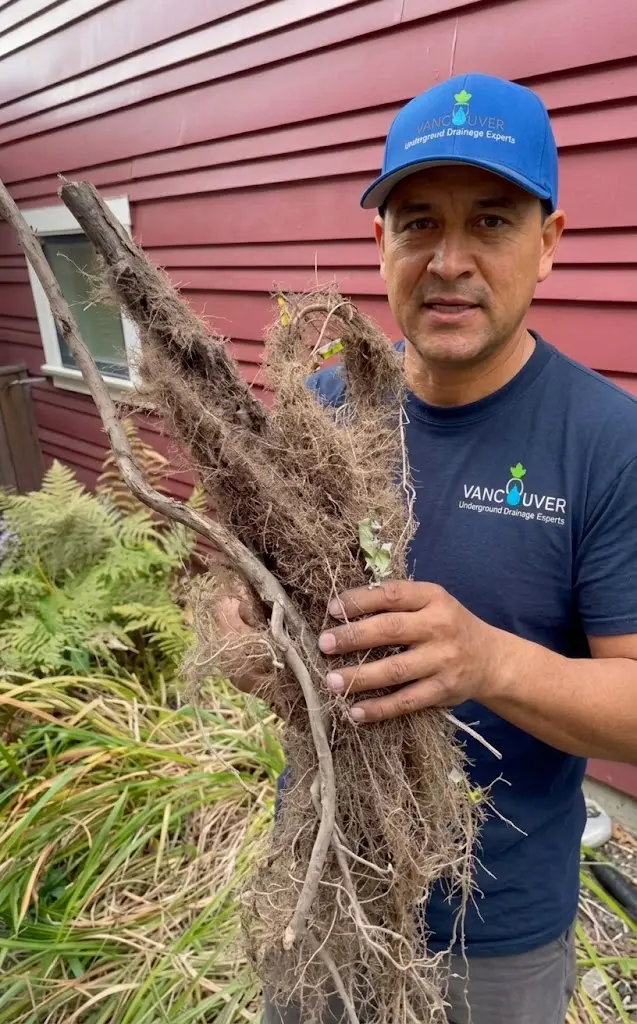
Tree roots can enter underground drainage through joints, cracks and damaged sections, gradually restricting the space available for water to move through the pipe.
Vancouver Underground Drainage Experts removes roots from accessible perimeter drains, drain tile, weeping tile and older clay drainage throughout Greater Vancouver.
We determine where the roots are entering, remove the obstruction using the appropriate equipment and assess whether the drainage itself remains serviceable.













Signs Tree Roots May Be Restricting Your Drainage
Roots underground are not visible from the surface, but certain drainage problems can be a reason to investigate the line.
Drainage Keeps Clogging
A line that repeatedly becomes restricted after previous cleaning may have an underlying obstruction that has not been removed.
Water Draining Slowly
Roots occupying space inside a drainage pipe can reduce its capacity and interfere with normal water movement.
Water Collecting Near the Foundation
If foundation drainage cannot move water away effectively, moisture or pooling may begin appearing around the building.
Problems Near Mature Trees
Large trees and established landscaping near underground drainage can increase the possibility of roots reaching openings in the system.
Older Clay Drain Tile
Clay drainage contains many individual sections and joints, creating potential entry points as the system ages.
Recurring Wet Areas
A section of the property that repeatedly stays wetter than surrounding areas may warrant investigation of the drainage serving that area.
How Tree Roots Get Into Drain Tile
Tree roots do not normally grow directly through an intact section of modern drainage pipe. They typically enter where the drainage system provides an opening.
Open Pipe Joints
Older drainage assembled from individual sections can develop openings at the joints where roots are able to enter.
Cracks & Physical Damage
A cracked or deteriorated pipe can expose the inside of the drainage system to surrounding soil and vegetation.
Separated or Shifted Sections
Ground movement and aging can cause sections of drainage to move out of alignment, creating additional openings.
Aging Clay Drainage
Older clay systems contain many joints and can deteriorate over time, making root intrusion a common condition to investigate when drainage problems develop.

How We Remove Roots From Underground Drainage
We use mechanical root-cutting equipment to remove roots from accessible perimeter drains, drain tile, weeping tile and older clay drainage.
Locate Suitable Drainage Access
We identify an appropriate entry point and determine which section of the underground drainage needs to be worked on.
Cut Through the Root Intrusion
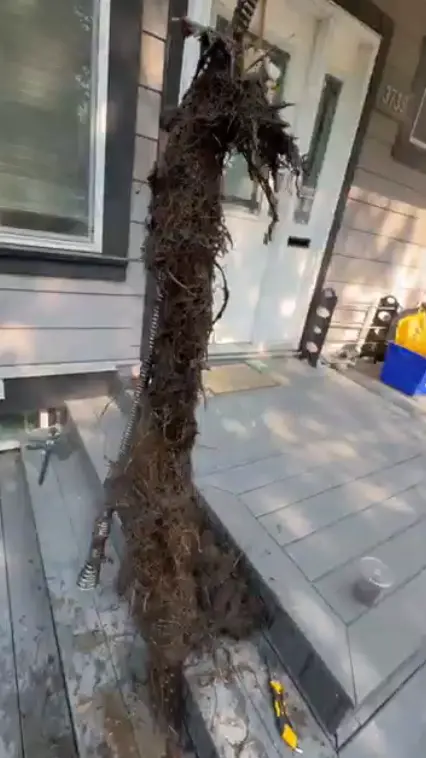
Root-cutting equipment is advanced through accessible drainage to mechanically cut and break apart roots restricting the pipe.
Remove the Obstruction
Loosened roots and accumulated material are cleared so water has more space to move through the drainage.
Assess the Condition of the Line
Where appropriate and accessible, the drainage can be checked after root removal to better understand the condition of the pipe and the location where intrusion occurred.
Root Cutting, Drain Cleaning or Drain Repair?
Different underground drainage problems require different solutions. We choose the service based on what is actually restricting or damaging the line.
Roots Inside the Drain
→ Root CuttingWhen significant root growth is physically occupying the pipe, mechanical root cutting or removal may be needed to open the drainage.
Sediment & Buildup
→ Drain CleaningMud, sediment and other loose buildup may be better suited to hydro flushing when the drainage remains structurally serviceable.
Learn About Drain Tile Cleaning →Unknown Condition
→ Camera InspectionWhen the cause of the problem is unclear, a camera inspection can provide visual information before choosing how to proceed.
Learn About Camera Inspections →Broken Pipe
→ Drainage RepairA crushed, collapsed or physically failed drainage section cannot be restored simply by removing roots or sediment.
Learn About Perimeter Drain Repair →Tree Roots in Older Clay Drain Tile
Older clay foundation drainage is particularly important to assess carefully when roots are present.
Clay drainage was commonly installed in short individual sections rather than long continuous plastic pipe. That means an older system can contain many joints around the foundation.
As the drainage ages, roots may enter through those joints or through sections that have shifted, cracked or deteriorated.
Why does this matter when removing roots?
Cutting through the roots may reopen the drainage, but the condition of the clay tile determines what happens next.
If the system remains serviceable, root removal may restore useful drainage flow. If the pipe has significant physical deterioration, individual sections may require repair or a larger portion of the system may eventually need replacement.

What Happens After Root Cutting?
Pipe Remains Serviceable
If the drainage remains in usable condition after the obstruction is removed, no excavation may be required at that time.
Roots Entered Through a Localized Opening
If intrusion can be associated with a damaged joint or localized failed section, repairing that area may help address the entry point.
Drainage Has Significant Damage
Crushed, collapsed or badly deteriorated sections may require excavation because removing roots cannot restore the physical structure of the pipe.
Widespread System Deterioration
If an older drainage system has failures throughout a larger area, replacement may be more practical than repeatedly repairing individual sections.
Drain Root Cutting & Removal Pricing
The cost of root removal depends on the type of drainage, available access, severity of the root intrusion and how far equipment needs to travel through the underground line.
Underground Drainage Experience Matters
Exterior
Drainage Focus
We work with underground exterior drainage including perimeter drains, drain tile, weeping tile and older clay systems.
Diagnosis
Before the Solution
Root intrusion can exist alongside sediment or physical pipe damage. We focus on identifying the condition of the drainage rather than assuming every restriction needs the same treatment.
Experience
With Older Systems
Older Greater Vancouver properties can contain clay tile, aging joints and drainage configurations that require careful assessment before aggressive cleaning or root removal.
Covered &
Established
Serving Greater Vancouver since 2019, WorkSafeBC covered and carrying $2 million liability insurance.
Drain Root Removal Throughout Greater Vancouver
We provide root cutting and removal for accessible underground exterior drainage at residential, strata and commercial properties throughout Greater Vancouver.
What Our Customers Are Saying
“excellent service to fix my sinkhole” The customer highlighted the team's clear explanation of the technical work, reasonable pricing and successful repair of a backyard sinkhole.
“communication was excellent, and the team was polite” After recurring yard pooling, a camera inspection identified missing drainage. New drainage was installed and tied into the existing system.
“everything has been working smoothly” The team added a gravity sump in the front yard and cleaned the property's clay drain tile. The customer also highlighted the communication throughout the project.
“very pleased with the work” This project included foundation excavation, repairs, waterproofing, a new two-pipe drainage system and a new sump. The customer highlighted the team's communication and care.
Frequently Asked Questions
Answers to common questions about tree roots in perimeter drains, drain tile and underground foundation drainage.
How do I know if tree roots are in my drain tile?
Recurring drainage restrictions, slow drainage, wet areas near the foundation and problems around mature trees can be reasons to investigate. These symptoms do not confirm roots on their own, so inspecting the drainage may be needed to determine what is inside the line.
Can tree roots grow into perimeter drains and drain tile?
Yes. Roots can enter underground drainage through pipe joints, cracks, separated sections and other openings. Older sectional clay drain tile can provide many potential entry points as the system ages.
Can hydro flushing remove tree roots?
Hydro flushing can remove some root intrusion, particularly finer roots, but significant or dense root growth may require mechanical root cutting. The appropriate method depends on the severity of the roots and the condition and material of the drainage.
Will tree roots grow back after root cutting?
They can. Root cutting removes roots from inside the drainage, but it does not repair the joint, crack or opening that allowed them to enter. If that opening remains, roots may eventually return.
Does finding roots mean my drain tile needs replacement?
Not necessarily. Drainage that remains structurally serviceable may continue to function after the roots are removed. Repair or replacement becomes more relevant when inspection reveals significant deterioration, collapsed sections or other physical failures.
Can roots be removed from old clay drain tile?
In some cases, yes. The available access and condition of the clay drainage matter because older systems may have shifted joints, cracks or deterioration that affect which cleaning or root-removal method is appropriate.
Should the drain be camera inspected after root removal?
A camera inspection can be useful after the roots are cleared because previously obstructed sections can then be examined for open joints, cracks, offsets or other damage.
Can root cutting repair a cracked or separated drain?
No. Root cutting removes the root obstruction; it does not reconnect separated pipe or repair cracked, crushed or collapsed drainage.
How much does drain root removal cost in Vancouver?
Pricing depends on drainage material, available access, the severity of the root intrusion and how far the equipment needs to travel. See the pricing section above for our current root-cutting prices.
Book Drain Root Removal
Tell us what is happening with your underground drainage and where the property is located. Our team can review the information and determine the appropriate next step.
Request Drainage Service
Fill out the form below and our team will review your request.
The contact form will load automatically when you reach this section. You can also load it now.