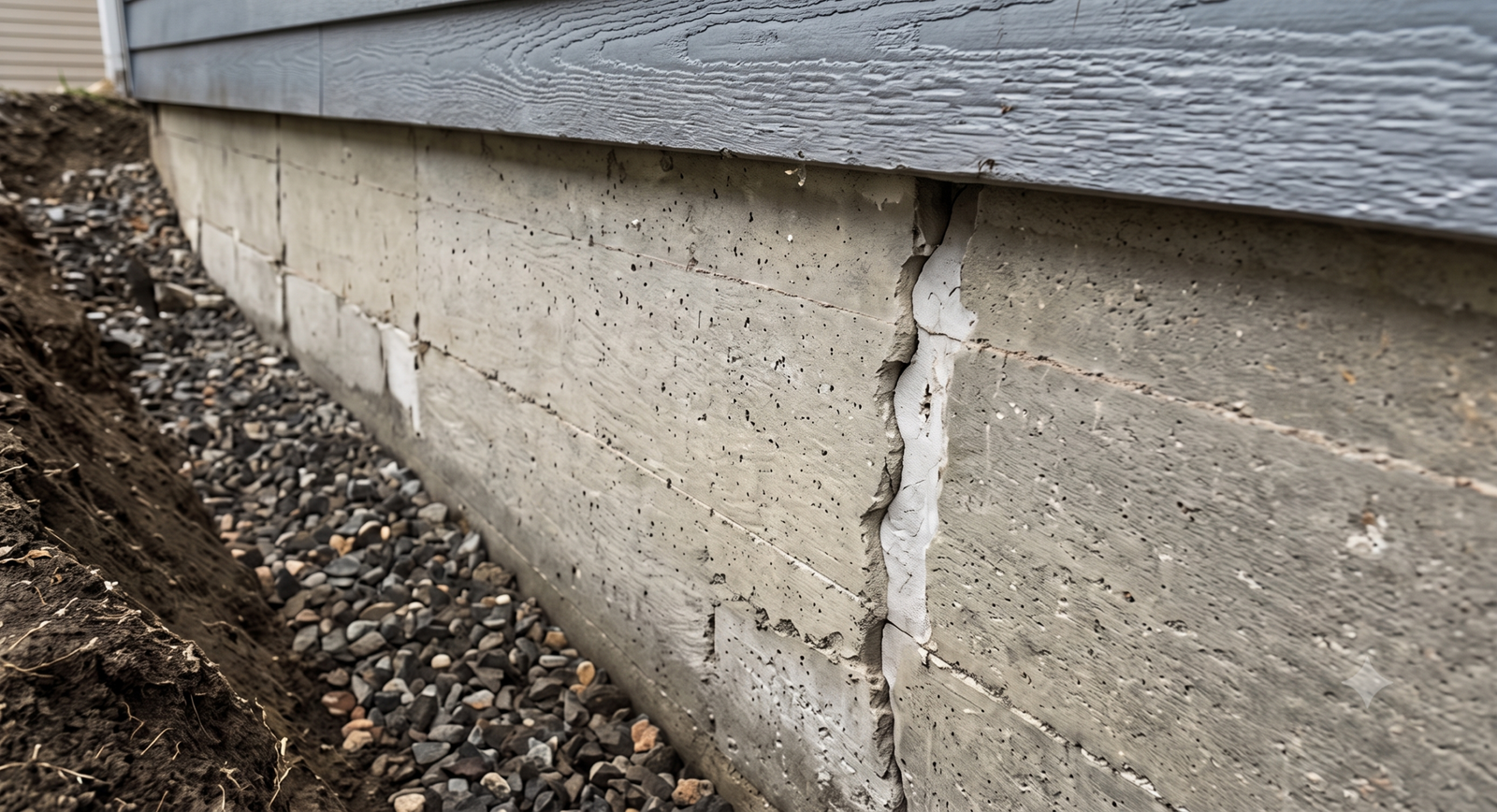
Interior Basement Waterproofing

Interior Basement
Waterproofing Vancouver

A wet or leaking basement does not always require digging around the outside of your home.

Vancouver Underground Drainage Experts provides interior basement waterproofing throughout Vancouver and Greater Vancouver for homes, strata properties and commercial buildings.

Depending on the property and how water is entering, the solution may include waterproofing basement walls, interior drainage, basement sealing or a sump pump system.

Basement
Waterproofing
Interior
Drainage
Basement
Sealing
Sump
Systems
Since 2019
WorkSafeBC Covered
$2M Liability Insurance
Interior Basement Solutions

Waterproof Basement Walls From the Interior

Water entering through below-grade basement walls can sometimes be controlled from inside the basement without excavating around the exterior foundation.

With interior basement wall waterproofing, the required section of foundation wall is exposed so the existing concrete or masonry and the water problem can be assessed.

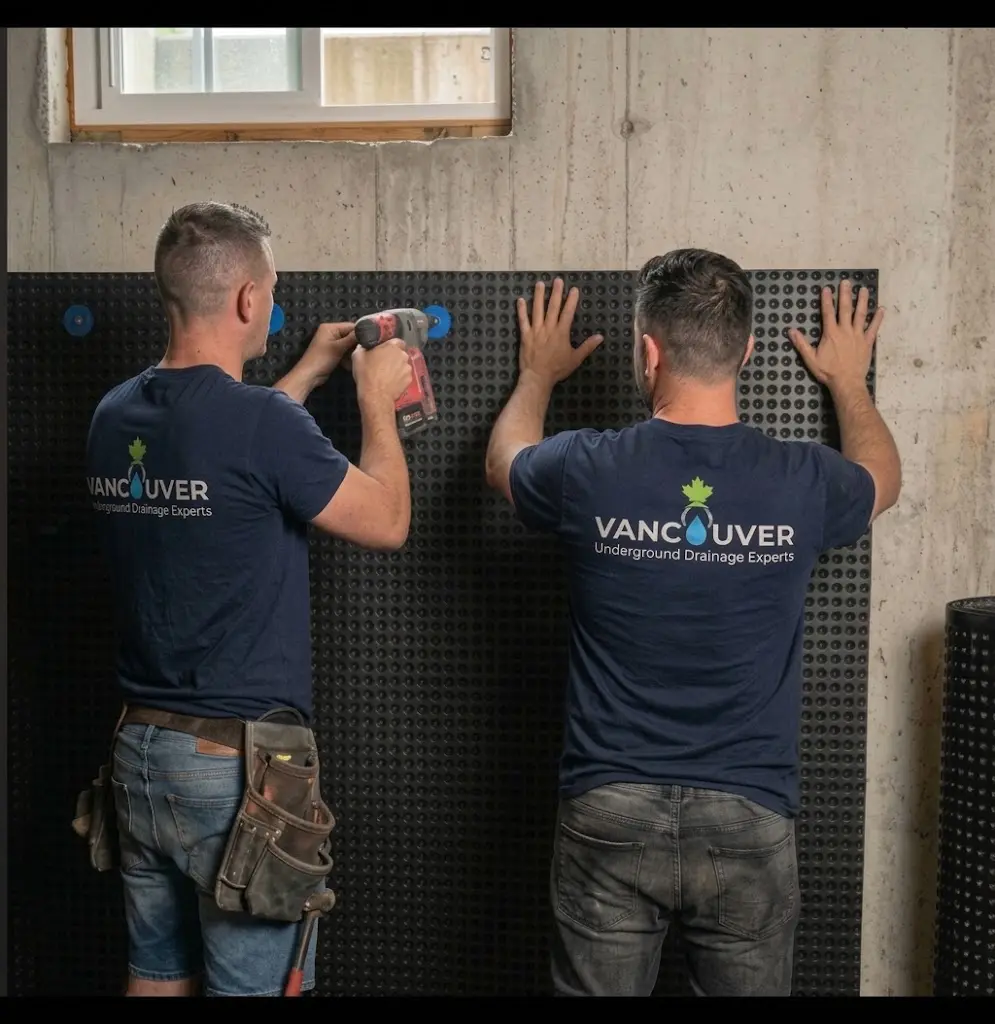
Depending on the conditions and system being installed, an interior waterproofing membrane or other appropriate waterproofing material can be installed along the inside of the foundation wall.

Where a drainage membrane system is used, water reaching the interior side of the foundation is given a controlled path downward toward drainage below rather than being allowed to enter the usable basement space.
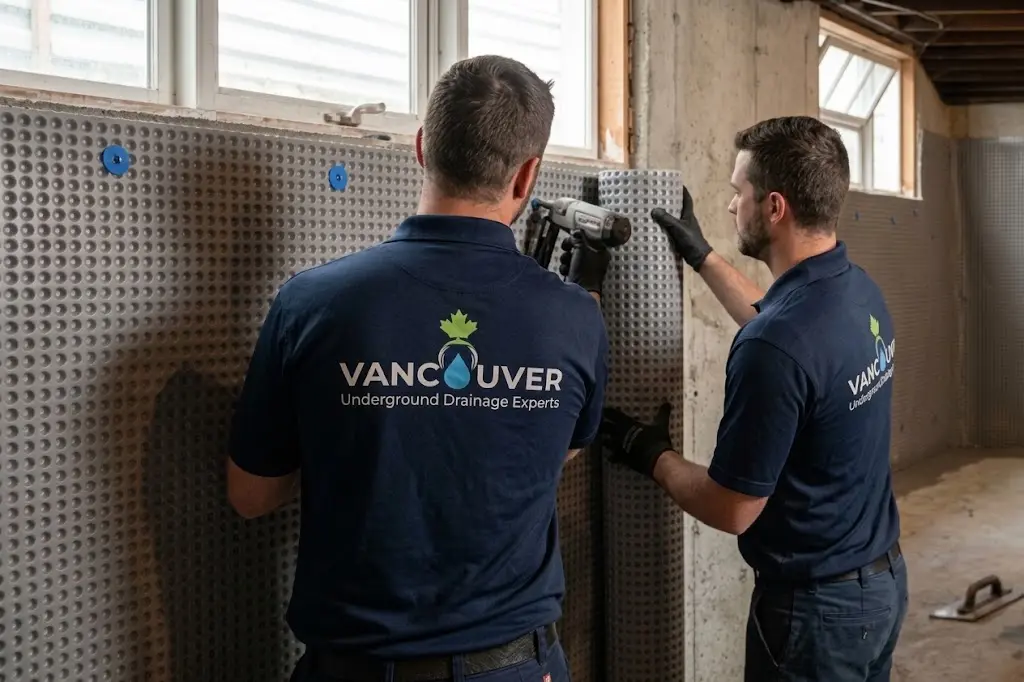
Interior basement waterproofing membrane installed along a concrete foundation wall
Installation Process

How Interior Basement Wall Waterproofing Is Installed

01

Access the Foundation Wall

Drywall, insulation or other materials are removed where necessary.

02

Inspect the Exposed Foundation

The exposed wall is assessed so the waterproofing work can be planned.

03

Prepare the Required Area

The foundation wall and surrounding area are prepared for installation.

04

Install the Interior Waterproofing System

The appropriate membrane or waterproofing material is installed along the wall.

05

Connect the Water-Control System

The bottom of the wall system is arranged so collected water can reach the interior drainage below.

Foundation Wall → Interior Waterproofing → Interior Drainage
Interior Drainage Systems

Interior Drainage for
Wet Basement Waterproofing

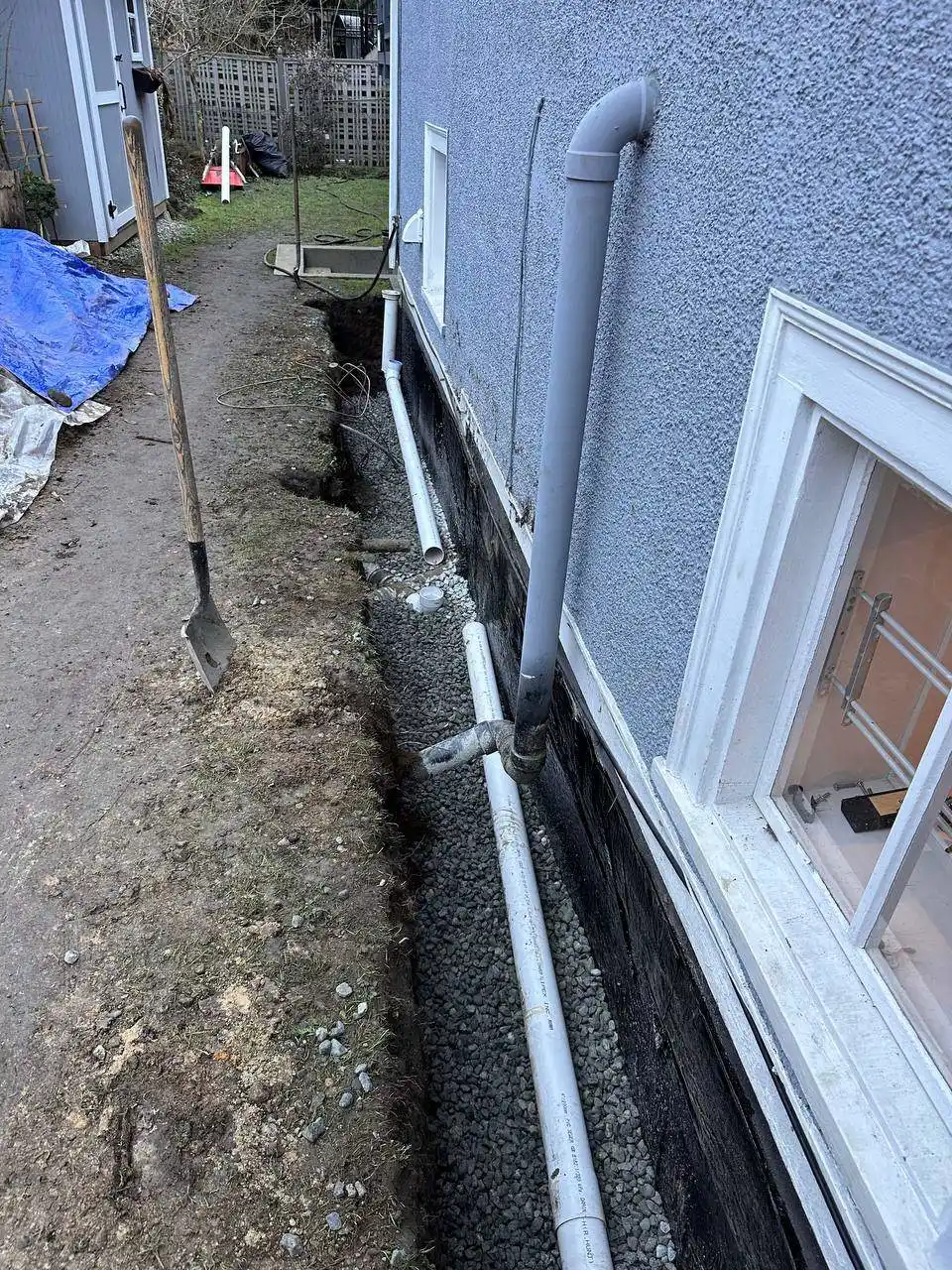
When basement water needs to be collected at the lower perimeter, an interior drainage system can provide a dedicated route for moving that water away from the basement area.

The system is installed at or below the edge of the basement floor. Water reaching the drainage is collected and directed toward the designed collection or discharge point rather than being allowed to spread across the basement.

What Happens Below the Basement Floor

1

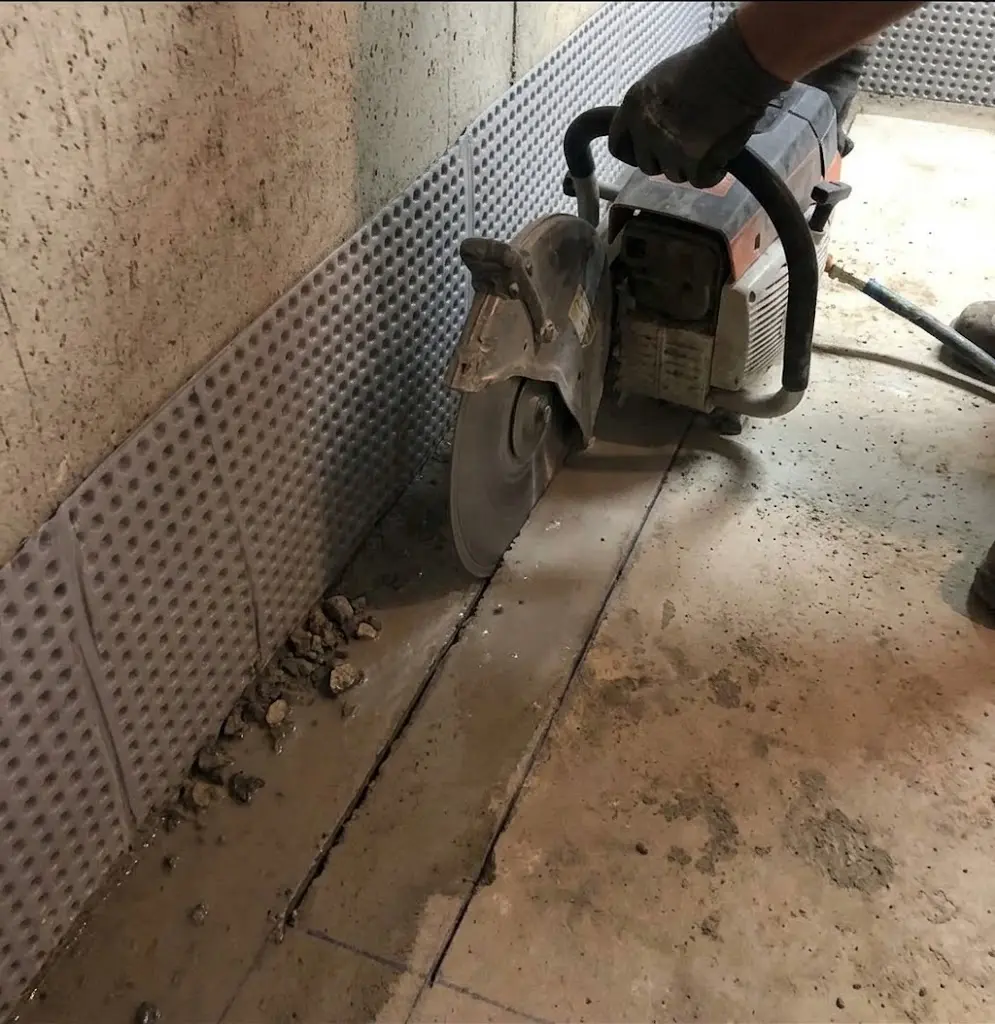
Cut Concrete

Cutting the concrete basement floor for interior drainage installation

The required section of concrete is cut and opened along the basement perimeter.

2

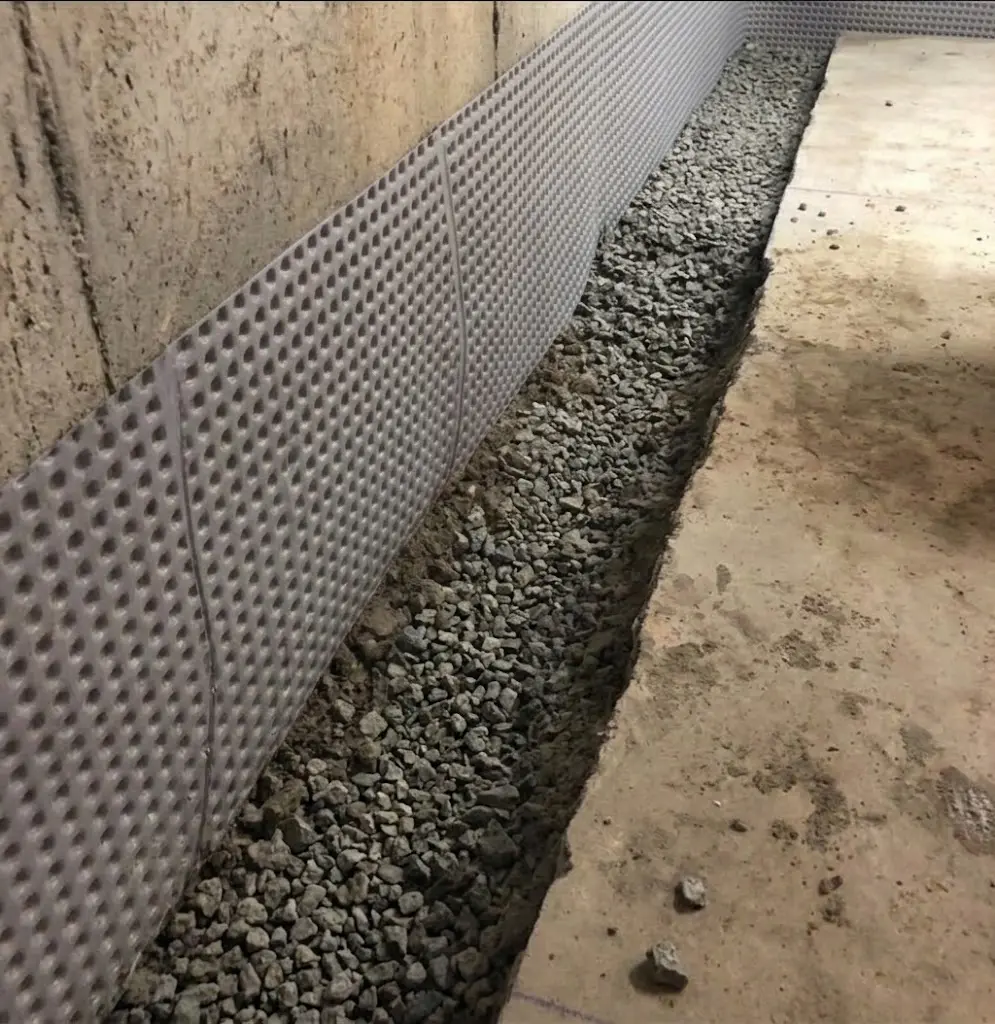
Add Gravel

Adding drainage gravel below a basement floor

Drainage gravel is placed in the opened channel to prepare the area for the drain pipe.

3

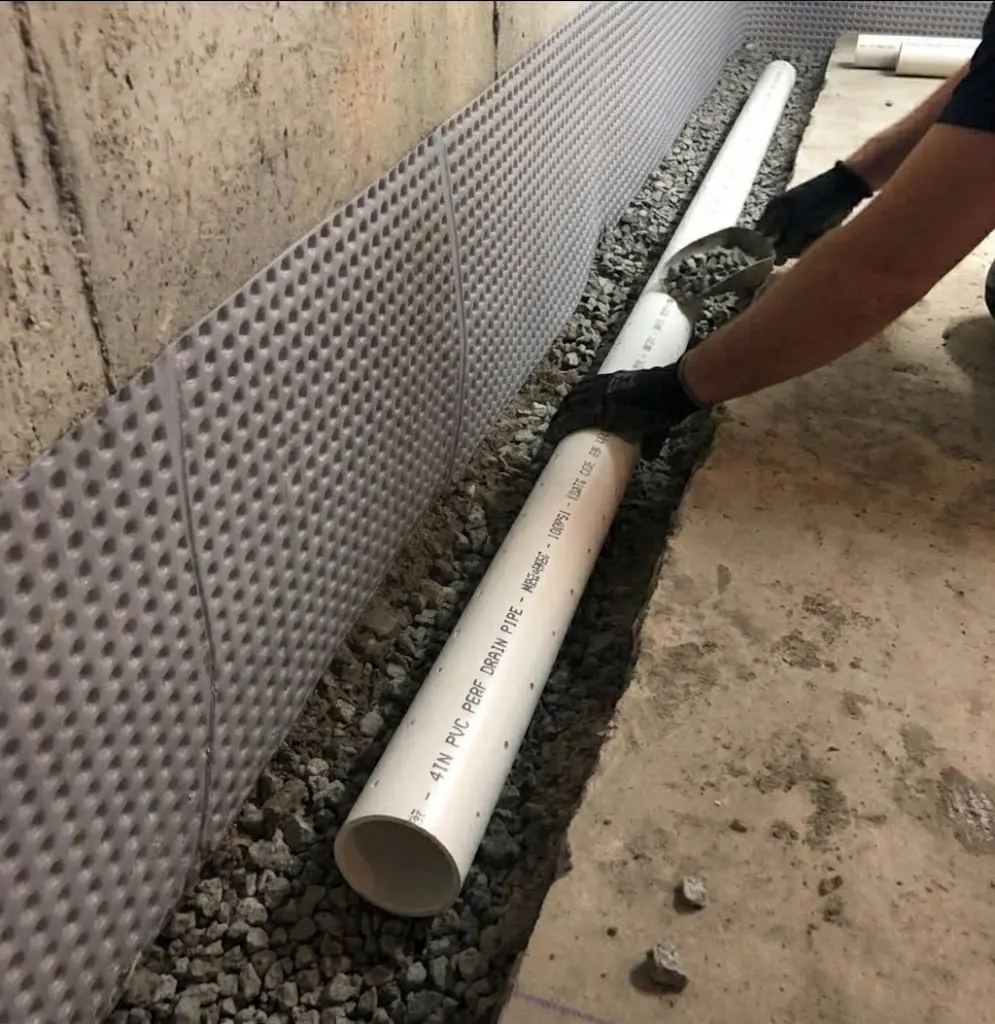
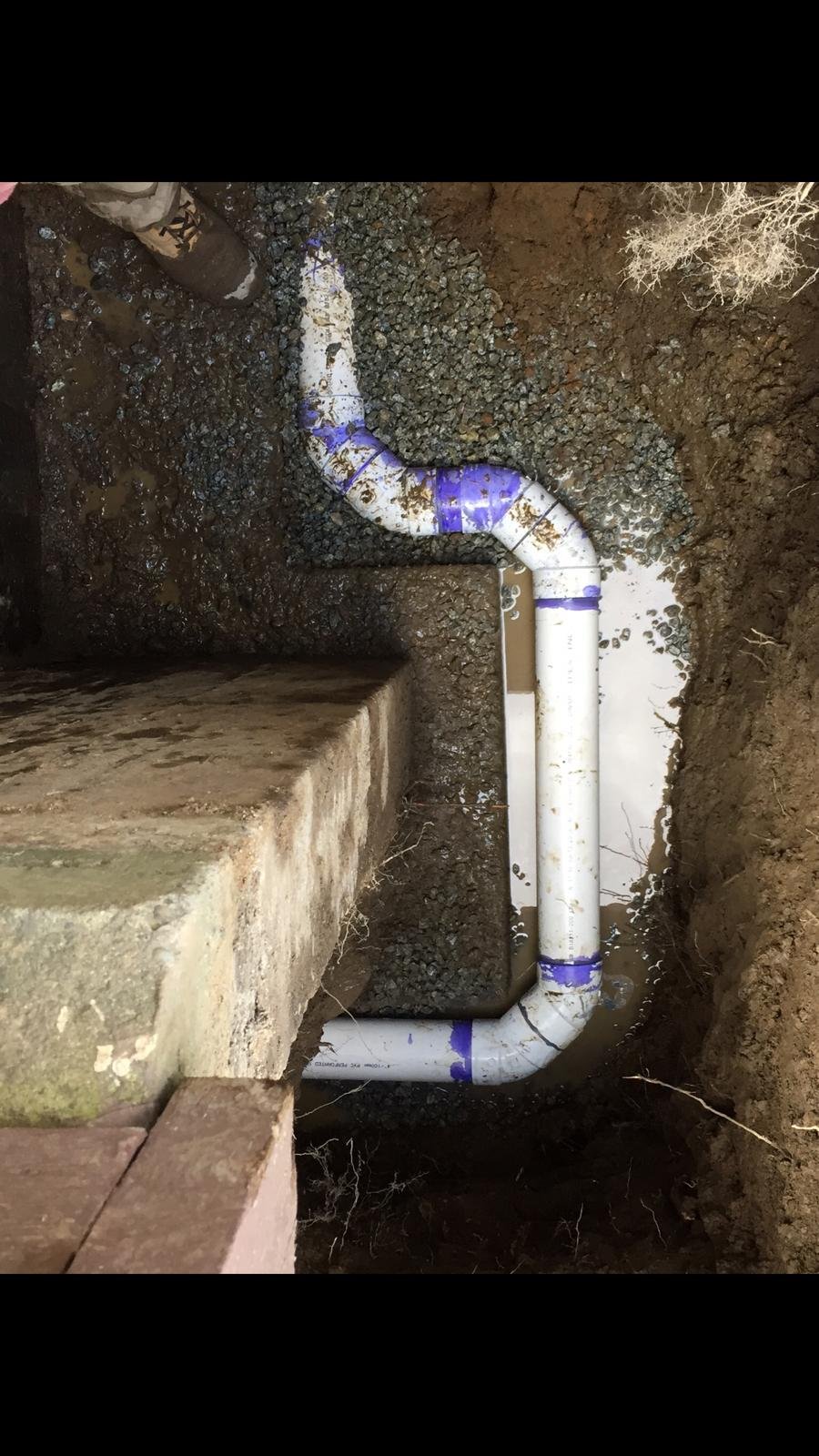
Install Drain Pipe

Installing interior basement drainage pipe

The drain pipe is installed within the prepared channel to collect and direct water.

4

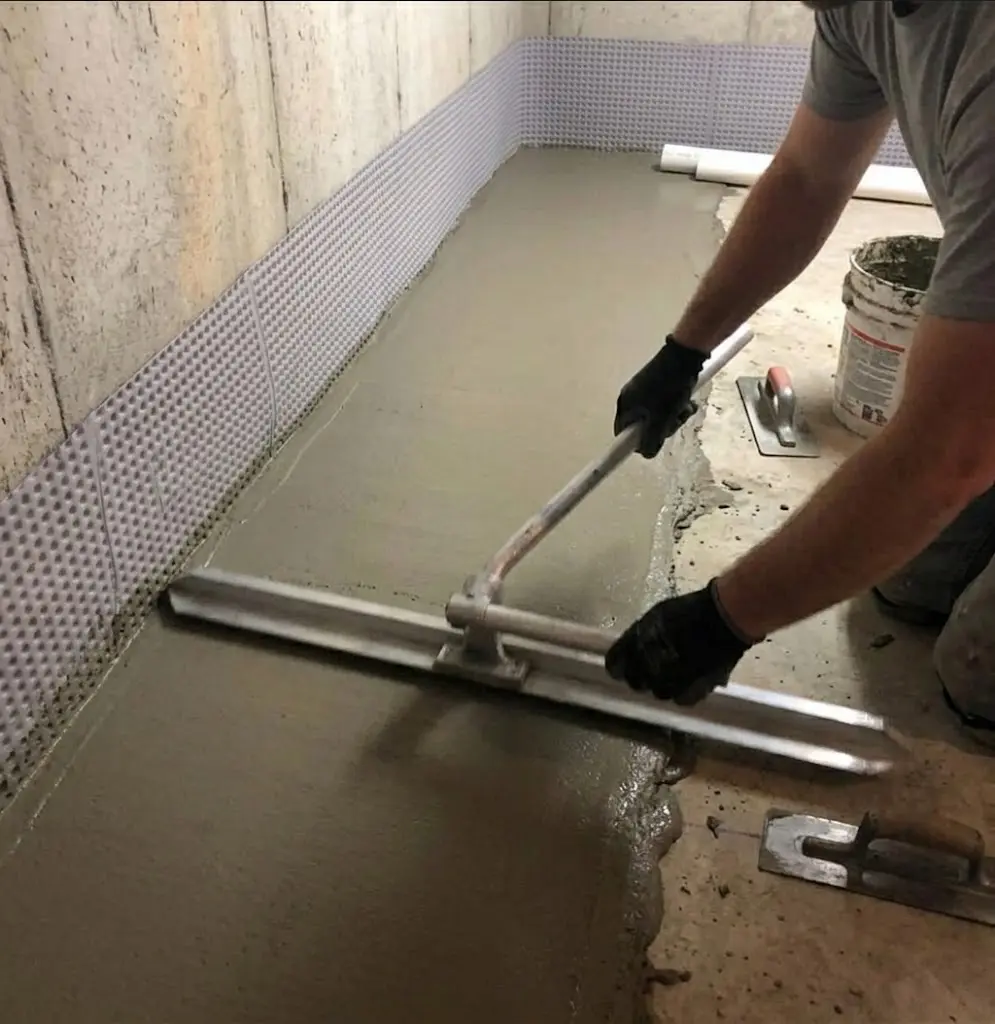
Restore Concrete

Restoring the concrete floor after basement drain installation

Once the drainage system is installed, the opened section of the basement floor is covered and restored.

Interior drainage does not automatically need to surround the entire basement. The location and length depend on the waterproofing design and where water needs to be collected.
Localized Water Entry Points

Basement Sealing & Leak Repair

A localized basement leak does not necessarily require a larger waterproofing system.

When water is entering through a specific accessible opening, basement sealing may provide a more focused solution.

Our basement sealing services can address localized water-entry points such as:

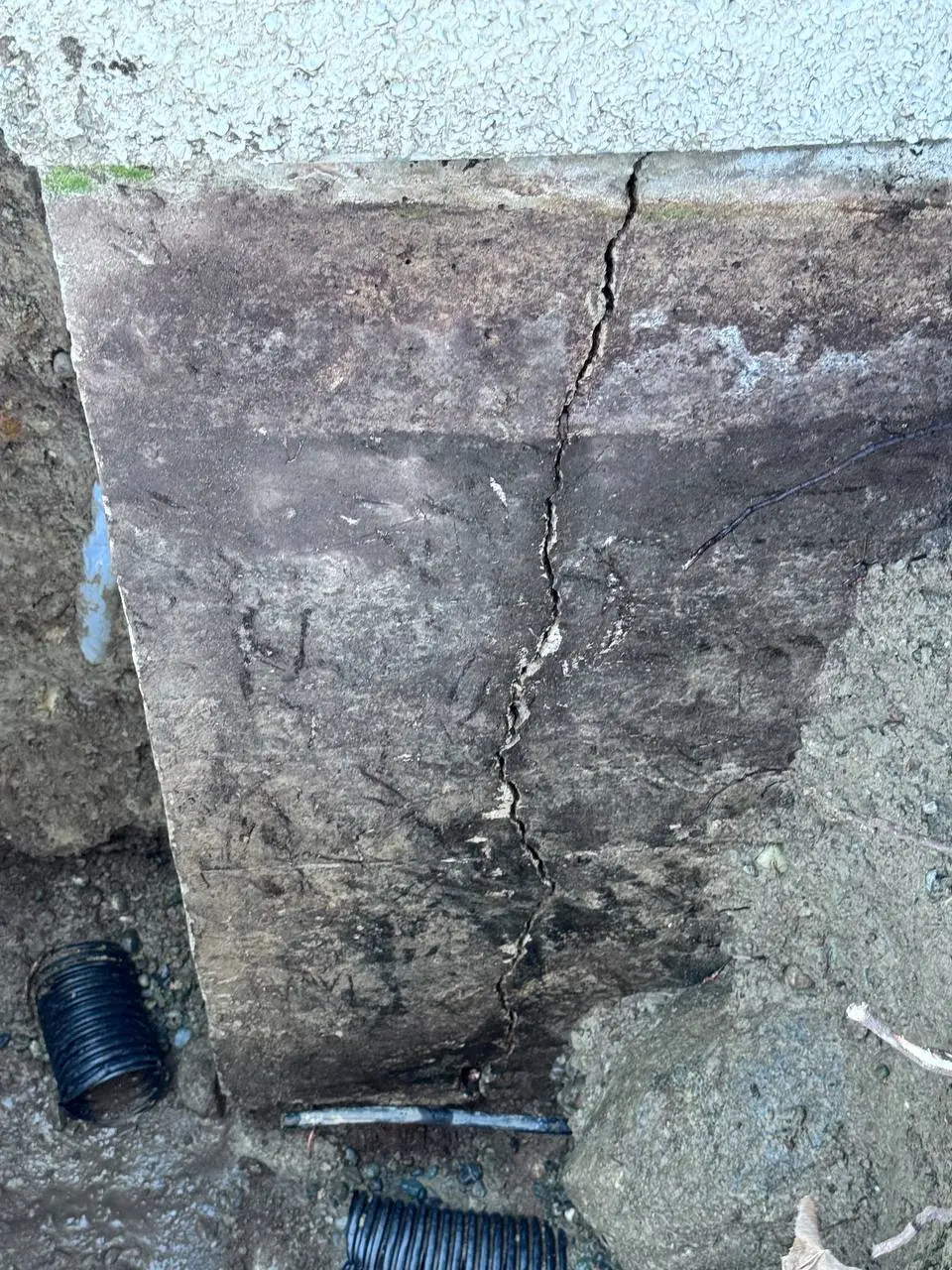
Foundation Cracks

Cracks through a concrete foundation wall can create a direct water-entry point.

Pipe Penetrations

The area surrounding a pipe passing through the foundation may require sealing.

Utility Openings

Openings created for electrical or other utilities can allow water through the foundation.

Small Gaps & Openings

Other accessible openings in below-grade areas may also require localized sealing.

A Focused Approach to Basement Leaks

The affected area is exposed and prepared before the appropriate sealing or repair method is determined.

If a foundation crack requires dedicated repair because of its condition, deterioration or movement, it should be addressed as a foundation repair rather than simply sealed as a basement leak.

Is the water entering through a foundation crack? View Foundation Crack Repair
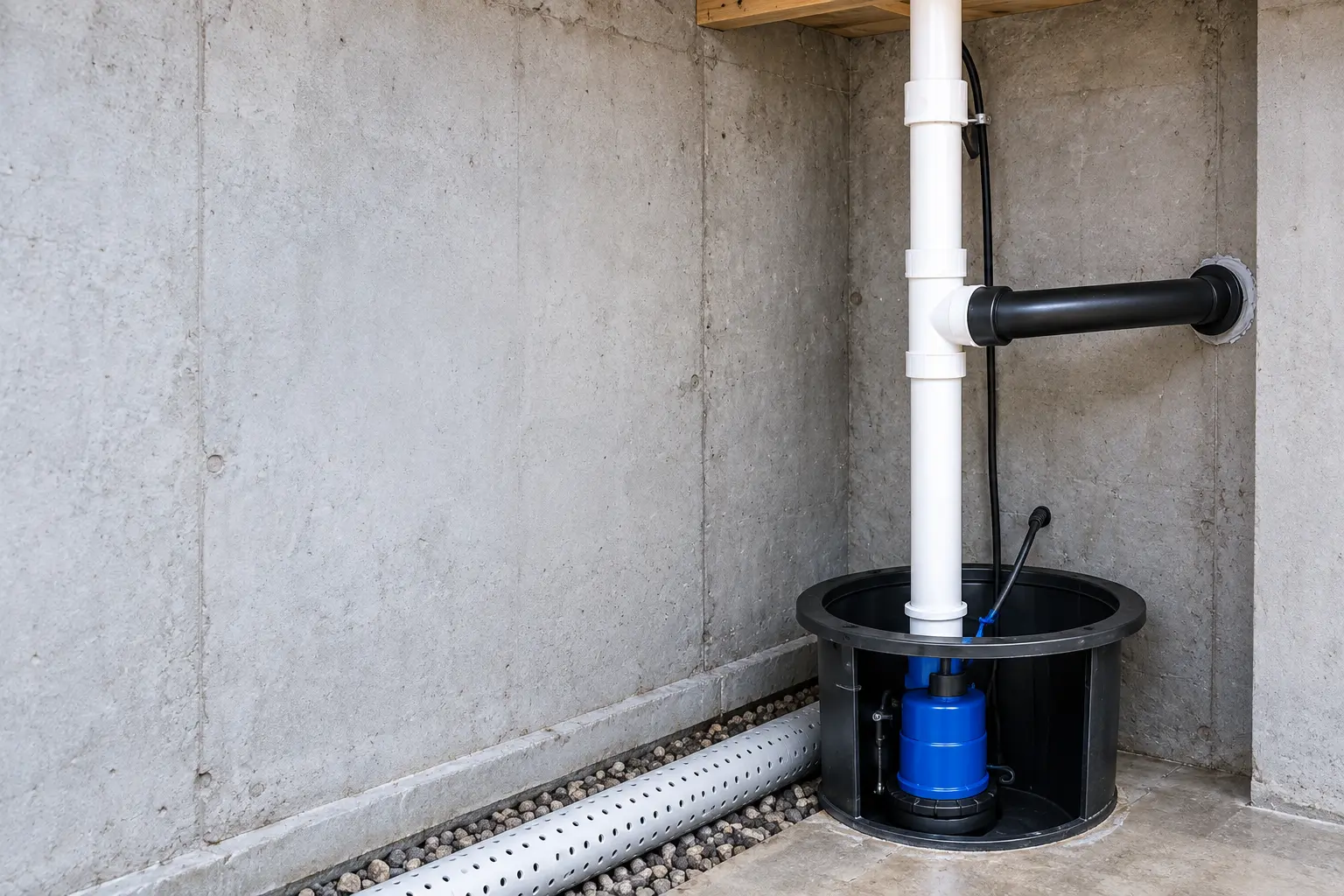
Interior basement sump pump connected to basement drainage and discharge piping
Sump Pump Systems

Sump Pumps for
Basement Waterproofing

Collecting basement water is only useful if there is an appropriate way to move that water away.

Some interior waterproofing systems can direct collected water through a suitable drainage arrangement. Other properties may require a sump pump system.

A sump pit creates a collection point below the basement floor. Water from the interior drainage enters the pit, and when it reaches the pump's operating level, the pump activates and moves the water through a discharge line.

Not every basement waterproofing project requires a sump pump. Whether one is needed depends on the drainage design and where the collected water can be directed.
Interior Solutions

When Is Interior Basement Waterproofing Used?

Interior basement waterproofing can be considered when a water problem needs to be managed from inside the basement.

It can be particularly useful when an interior wall waterproofing, drainage or localized sealing system is appropriate for the conditions.

An interior approach may also be considered when reaching the outside of the foundation would involve significant disruption to patios, walkways, landscaping or other structures around the property.

The appropriate approach depends on the basement construction, where water is entering and the drainage conditions affecting the building.

We assess the basement before determining whether an interior waterproofing system is appropriate.

Interior Access

Useful when a water problem can be managed from inside the basement.

Less Exterior Disruption

May be considered when excavation outside would significantly affect patios, walkways, landscaping or other structures.

Multiple Interior Solutions

May include interior wall waterproofing, drainage or localized sealing systems depending on the conditions.

Finished Basements

Can You Waterproof a Finished Basement?

Yes. However, a finished basement requires additional planning because the foundation wall and floor may be hidden behind interior finishes.

Drywall, framing, insulation, baseboards, flooring, cabinets and built-ins can cover the areas where waterproofing work needs to take place.

Before starting, we determine which areas need to be accessed.

Three Things We Plan First

Access

Which portions of the foundation wall or basement floor need to be reached?

Finishes

Which existing materials are covering those areas?

Work Area

How much of the basement needs to be opened to complete the required waterproofing?

Only the areas necessary for the waterproofing work should be opened rather than unnecessarily disturbing unrelated portions of the basement.
Pricing & Estimates

How Much Does Interior Basement Waterproofing Cost in Vancouver?

The cost of basement waterproofing in Vancouver depends on the type and size of the system required.

A localized basement leak and a larger interior waterproofing project can involve very different amounts of labour and materials, which is why there is no single price that applies to every basement.

What Determines Your Basement Waterproofing Cost?

Amount of Basement Wall

The length and area of foundation wall requiring interior waterproofing affects labour and materials.

Interior Drainage Length

Installing drainage along one problem area involves a different scope than installing it along a larger basement perimeter.

Concrete Work

Interior drainage can require portions of the concrete basement floor to be opened and restored.

Finished Basement Access

Existing drywall, flooring, cabinetry and other finishes can affect access and labour.

Localized Basement Sealing

Repairing one accessible water-entry point can involve a smaller scope than installing a larger waterproofing system.

Sump Pump Requirements

A project requiring a sump pit, pump and discharge line includes additional equipment and installation work.

All Property Types

Residential, Strata & Commercial
Basement Waterproofing

Vancouver Underground Drainage Experts provides interior basement waterproofing for different types of properties throughout Greater Vancouver.

Residential
Basement Waterproofing

Interior waterproofing for basements and other below-grade areas in single-family homes.

Strata
Basement Waterproofing

Waterproofing for below-grade areas within townhouses, condominium buildings and other strata-managed properties.

Commercial
Basement Waterproofing

Interior waterproofing for basements, storage areas, mechanical spaces and other below-grade areas within commercial properties.

Experience. Drainage. Solutions.

A Drainage Company That
Understands Basement Water

Basement waterproofing and drainage are closely connected.

When an interior waterproofing system collects water, that water still needs to be properly controlled and directed. Our work focuses on drainage, foundations and below-grade water problems, allowing us to look at the waterproofing system together with the way water will be managed.

Since 2019

Serving Greater Vancouver

20+ Years

Large Drainage Project Experience

Residential &
Larger Projects

From local basement work to major drainage projects

WorkSafeBC Covered

$2 Million Liability Insurance
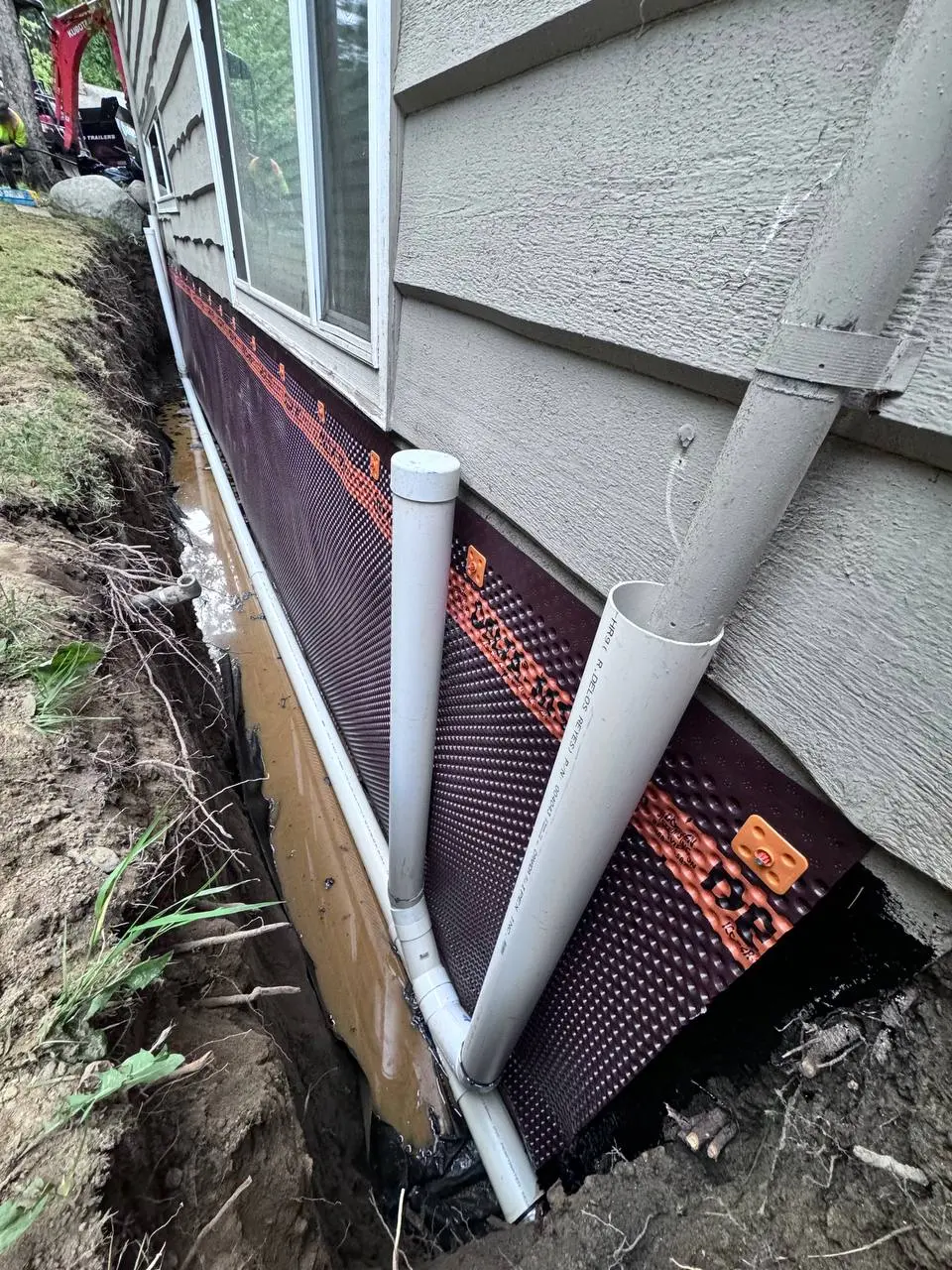
Areas We Serve

Basement Waterproofing Across Greater Vancouver

We provide interior basement waterproofing throughout Greater Vancouver, including:

Vancouver Burnaby Richmond North Vancouver West Vancouver Coquitlam New Westminster Surrey Delta Langley Maple Ridge Pitt Meadows
Basement Waterproofing FAQ

Common Basement Waterproofing Questions

How long does basement waterproofing last?

A properly installed interior basement waterproofing system can often last 20 years or longer, and some components can last for the life of the structure.

For example, an interior drainage channel or membrane can remain in place for decades, while a sump pump is a mechanical component that will normally need replacement sooner.

Will basement waterproofing stop mould from coming back?

It can help if recurring water entering the basement is what is causing the mould.

For example, if a basement wall repeatedly becomes wet after rain and the drywall develops mould, stopping that water entry addresses an important source of the moisture. Existing mould still needs to be dealt with separately.

Can basement waterproofing get rid of a musty basement smell?

It can if the smell is being caused by a recurring wet-basement problem.

For example, damp concrete walls, wet flooring or water behind finished walls can create a musty smell. If the basement stays dry but the smell remains, mould, damp materials, plumbing or humidity may also need attention.

Can you waterproof an old concrete basement?

Yes. Older concrete basements can often be waterproofed from the inside.

For example, an older Vancouver home with water entering along the bottom of the wall may be a candidate for interior drainage along the wall-floor perimeter. Older foundations should still be inspected first for cracks, deterioration and previous repairs.

Can concrete block basement walls be waterproofed from the inside?

Yes, in many cases.

Concrete block walls can allow water to travel through hollow blocks and mortar joints, so the solution may involve managing water across the interior wall and directing it into drainage at the bottom.

Why does my basement only leak during heavy rain?

A basement that leaks only during heavy rain often means more water is building up around the foundation than during normal weather.

For example, saturated soil can increase water pressure against below-grade walls and expose a crack, wall-floor joint, penetration or other weak point.

Why does my basement leak when snow melts?

Melting snow can release a large amount of water into the soil in a short period.

If the ground is frozen or already saturated, that water may have trouble draining away and can build up around the foundation, exposing a basement leak that is not noticeable during dry weather.

Can basement waterproofing be done in the winter?

Yes. Interior basement waterproofing can often be completed during winter because much of the work is done indoors.

For example, opening the concrete floor, installing interior drainage and waterproofing basement walls can often be completed without excavating frozen soil outside.

Do I need to move everything out of my basement before waterproofing?

Usually only the work area needs to be cleared.

For example, if drainage is being installed along two basement walls, furniture, storage and belongings should be moved away from those walls, but the entire basement may not need to be emptied.

How long does interior basement waterproofing take?

A smaller interior waterproofing job may take about 1–2 days, while a larger project can take several days or longer.

For example, sealing one localized leak is much faster than cutting the floor, installing drainage, waterproofing walls and adding a sump system.

Can I stay in my home during basement waterproofing?

Yes, homeowners can usually remain in the home during interior basement waterproofing.

The main disruption is typically limited to the basement work area, although concrete cutting can create more noise and dust than a small localized sealing repair.

Should I waterproof my basement before finishing it?

Yes, if the basement has leaked or has a known moisture problem, it is better to address that before installing new finishes.

For example, new drywall and flooring can hide a water problem temporarily, but those materials may be damaged the next time water enters.

Talk to Our Basement Team

Need Basement Waterproofing in Vancouver?

If water is entering your basement, send us the basic information about the property and affected area.

To Get Started, Send Us:

1

Your property address

2

Photos of the affected basement area

3

Where you are seeing water

4

Whether the basement is finished or unfinished

Our team can review the information and determine the appropriate next step.

Serving Greater Vancouver Since 2019
WorkSafeBC Covered
$2M Liability Insurance
Basement Waterproofing

Request an Inspection

Tell us what’s happening in your basement.

Contact form ready to load

The form will load automatically when you reach this section.

© 2024 Vancouver drainage experts

All rights reserved.