Vancouver and Burnaby homeowners know — our city’s mix of older homes, tight property lines, and unpredictable soil conditions can make drainage and waterline projects far more complicated than they sound.
Some projects test your skills. Others test your patience. And once in a while, you get a job that tests both.
That’s exactly what happened when we were called to a Burnaby home for a full waterline replacement. The city said it couldn’t be done. Another company had already tried and walked away. But for homeowners searching for a drainage company near me with the skills to handle the toughest excavation jobs in the Lower Mainland, this is exactly the kind of challenge we’re built for — and we knew there was a way.
This is the story of how we dug a 10-foot-deep trench by hand, navigated a maze of structural obstacles, and installed a high-quality Uponor Expansion PEX-A waterline that will serve this home for decades.
I’m Alex, one of the lead techs at Vancouver Underground Drainage Experts. The moment we assessed this job, I knew we were in for a challenge.
The existing waterline was failing, and the only way to replace it was to dig straight down ten feet and run about fifty-five feet of new pipe from the exterior to the boiler room. The catch? No machinery could reach the area. This was going to be 100% hand excavation.
We started early, knowing it would be a long day. With my team, four of us, shovels in hand, worked for 12 hours straight. The trench got deeper and deeper until we were standing shoulder-deep in the earth. At ten feet down, eve
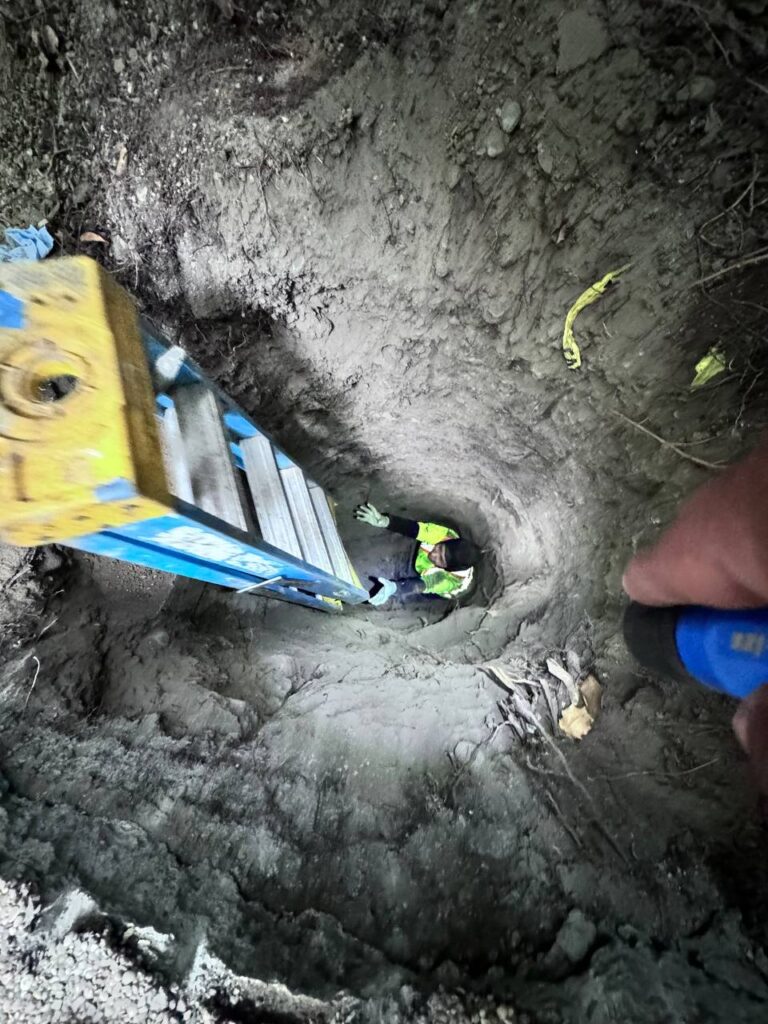
This shot shows me standing at the bottom of the trench, ladder beside me. It’s a clear view of just how deep we had to go to reach the waterline.
Why Manual Excavation Is Sometimes the Only Option
Homeowners often ask why we don’t just bring in a mini-excavator. In many cases, it’s a great solution. But here in Burnaby, especially on older properties with mature landscaping, fences, or tight lot lines, there’s simply no way to maneuver machinery without damaging the property.
Manual digging also gives us better control around fragile infrastructure like gas lines, sewer connections, or existing french drain vancouver systems. It’s slower, but it’s precise.
In this footage, you can see us connecting the new pipe in a confined, water-filled trench. The teamwork here is key — one tech positions the pipe while the other secures the connection.
Breaking Into the Structure
Once the trench reached the home’s foundation, we had to cut through exterior concrete to create an entry point. From there, things got tricky.
The only way inside was through a single wall stud bay, which meant drilling through each ceiling joist until we reached the boiler room. It’s a bit like threading a needle while lying on your side in a crawlspace — careful, methodical work that leaves no room for error.
While inside, we made sure to evaluate the foundation condition. If there had been seepage or signs of moisture, we would have recommended foundation waterproofing membrane or exterior foundation waterproofing to protect the structure for years to come.
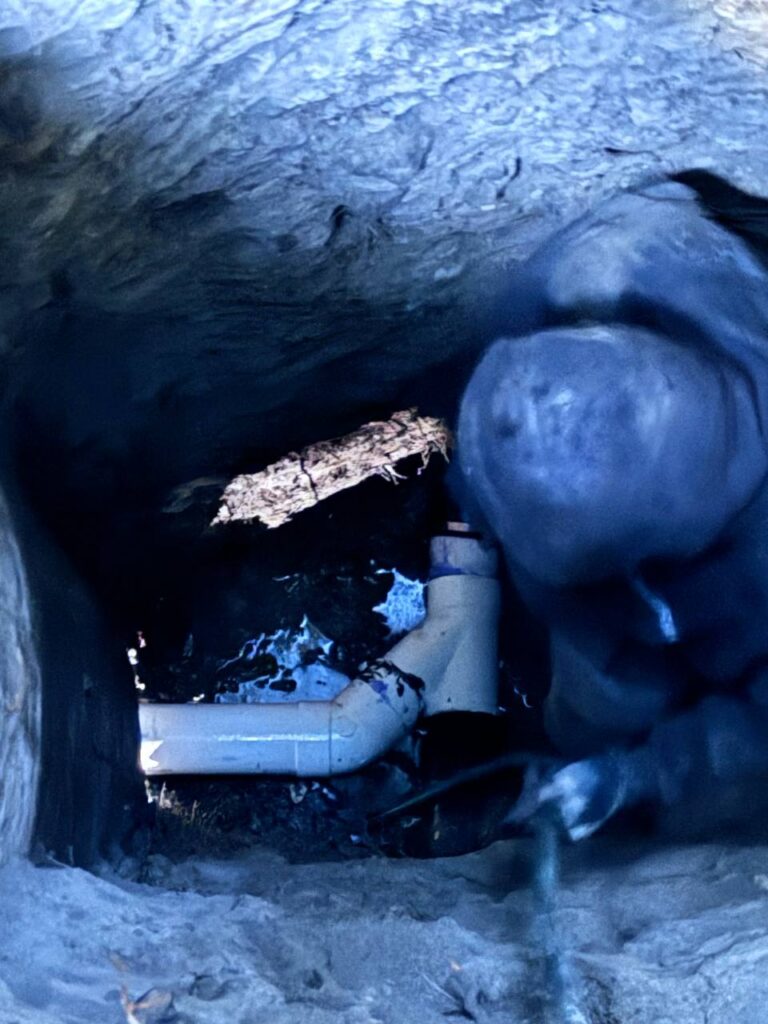
This image shows one of our techs setting a PVC pipe section into position inside the trench, with water pooling at the bottom. The placement and slope are critical for long-term performance.
Material Matters – Why We Chose Uponor Expansion PEX-A
Not all waterlines are created equal. For this project, we used Uponor Expansion PEX-A piping — the top standard in the industry. It’s more durable and flexible than the PEX-B used in many trenchless systems, and it comes with a manufacturer warranty that gives homeowners real peace of mind.
We also installed multiple shut-off valves for easier maintenance and a brand-new pressure-reducing valve (PRV) to protect the home’s plumbing from excessive city water pressure. All exterior lines were insulated to prevent freezing — a must in our climate.
This point-of-view shot captures the confined nature of the work. You can see the pipes, fittings, and a measuring tool we use to ensure accuracy in alignment and flow.
Backfilling and Preparing for Concrete
After the new line was fully connected, we backfilled the trench in layers, compacting as we went to prevent future settling. For the top layer, we used gravel to create a stable base for the upcoming concrete pour.
A standard concrete finish is included in our work, with exposed aggregate available for homeowners looking for a more decorative surface.
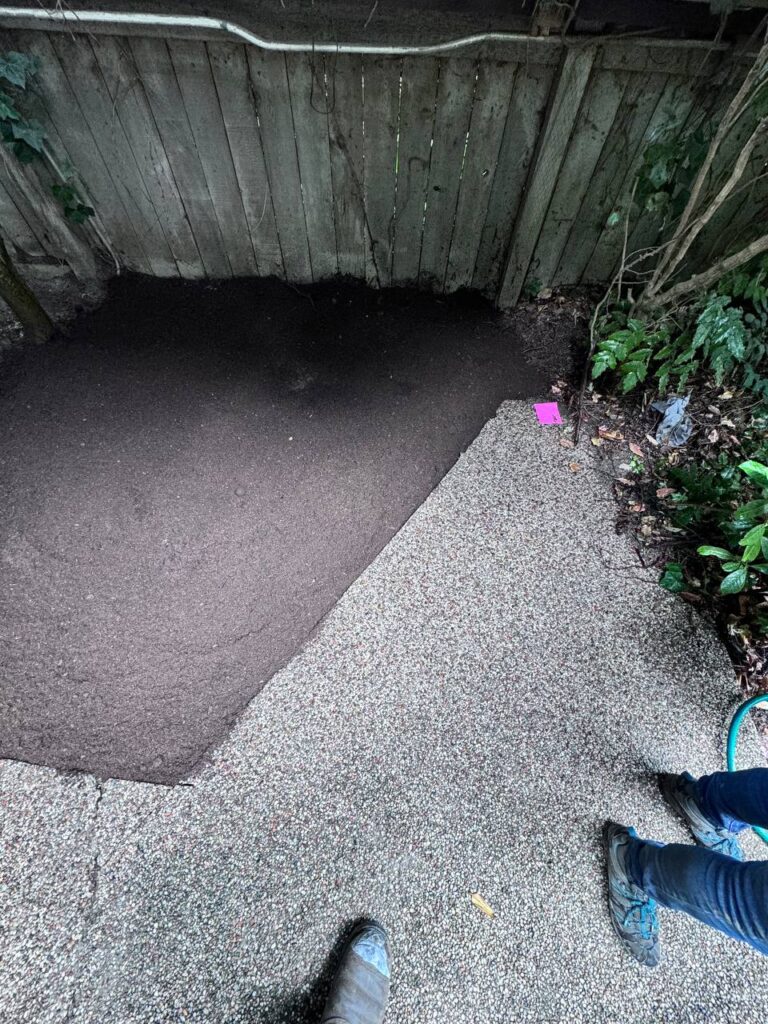
This photo shows the neat gravel layer compacted near the fence — the stage before pouring concrete.
Understanding Cost in Complex Excavations
When people see a price for a waterline replacement, they sometimes compare it to a simpler, machine-dug job. But as this project shows, not all replacements are equal.
Our labour on this job was $3,850 — reflecting the full day of intense manual excavation, plus the interior drilling and routing. Materials and service came to $1,789, which covered all pipe, fittings, valves, insulation, concrete, and the PRV.
Drywall repair wasn’t included yet because we never know exactly how many openings will be needed until routing is complete. That’s always discussed transparently with the homeowner.
If you’re searching foundation waterproofing near me or waterproofing companies near me, you’ll find a wide range of prices. Always ask what’s included — and whether the team has experience with projects like yours.
Why Local Experience Matters
In the Lower Mainland, drainage and waterline work isn’t just about plumbing — it’s about understanding the soil, the weather, and the architecture. Homes in East Van aren’t built the same way as homes in West Vancouver, and what works in Chilliwack’s clay-heavy soil might not work on a Sunshine Coast waterfront property.
That’s why, when homeowners search for a drainage company near me, they’re really looking for a team that knows the Lower Mainland inside and out. From heritage homes in East Vancouver to modern estates in West Van, we’ve learned how to adapt every project to the property’s unique structure and surroundings.
Frequently Asked Questions
- What is a catch basin and why is it important?
A catch basin collects surface water and directs it into your drainage system, preventing pooling and flooding. - What’s the difference between a french drain and a perimeter drain?
A french drain vancouver is typically used for surface water control, while a perimeter drain sits at the base of your foundation to collect groundwater. - When should I replace my sewer line?
If you’re dealing with frequent backups, foul odours, or soggy patches in your yard, it might be time for sewer line repair. - How does a foundation waterproofing membrane work?
A foundation waterproofing membrane creates a barrier between your foundation and surrounding soil, stopping moisture from entering.
By the end of the day, the Burnaby homeowners had a fully functional, high-quality waterline they could trust. They’d seen firsthand the amount of skill, labour, and care that went into the job — and they told us they wouldn’t hesitate to recommend us.
Whether you’re in Burnaby, North Vancouver, Coquitlam, or the Sunshine Coast, we bring the same commitment to every project: solving problems others can’t, and keeping your home dry and protected.